
Contents
I had been itching to do this train journey since the border first opened for train travel in 2021.. Actually, scratch that. I had been itching to do this train journey since before it even existed having already covered train journeys from the southernmost point of southeast Asia in Singapore to Vientiane in Laos. So this was kind of a continuation of my weird obsession for train travel in Asia.
However it wasnt until 2025 when I finally got round to completing it, partly due to me spending more time in Europe, but also the complications of visas at the time especially from our base in Bangkok. This changed back in 2024 when China introduced visa-free travel for many European countries including Ireland, and as a dual citizen (Irish/British) I was finally green lit for the journey. Then the UK got visa free travel in 2026.
Anyway, I finally took the train from Laos to China (from Vientiane to Kunming) in 2025 and it was kind of anticlimactic. In a good way I guess, as it was almost too easy, a silky smooth stretch to the Boten/Mohan border, a painless pass through immigration, and another silky smooth journey to Kunming. It kind of lacked the adventure of third class and sleeper trains we’re so used to with train travel in Thailand.
However I did kind of expect this having already travelled relatively extensively on high speed trains in Yunnan province, and in 2025 alone we covered Chinese cities such as Shanghai, Chongqing, Chengdu, Kunming, Lijiang, Shangri La by high speed train. Similar to Japan’s Shinkensen, train travel in China is super fast and super slick. Only much cheaper and more extensive.
You can watch my video diary here, or check below for full details of the journey.
How to Book Laos to China Train Tickets: LCR App and Prices
For Laos to China train tickets, I booked in advance through the official LCR Ticket app. I’d recommend doing the same, especially for first class or fixed travel dates.
Booking with the Official LCR Ticket App
Book via LCR Ticket for Android or iPhone. Select your stations, travel class and date, and enter your details exactly as they appear on your passport.
Booking the train wasn’t always quite so straightforward. Earlier versions of the LCR Ticket registration process required a Lao phone number, which was hardly ideal when trying to arrange everything before arriving in Laos. By the time I booked my journey in 2025, I was able to use my Thai SIM instead. Not much help to somebody planning the trip from the UK, mind you. Fortunately, email registration is now an option, making it much easier to arrange tickets before travelling. Just follow the current sign-up instructions in the app, as verification options can still change.

When Do International Train Tickets Go on Sale?
For the cross-border service, tickets can be sold up to 15 days before departure under the official China–Laos international railway ticket rules. This is different from the sometimes shorter sales windows for domestic Lao trains, and it’s a distinction that causes plenty of confusion online. I would book as soon as my travel date is firm, especially around holidays or if I want a particular class. Check actual availability in the booking system rather than assuming a ticket will be there on the day.
If you’re joining from Vang Vieng, Luang Prabang or Muang Xay, check that the specific train stops there and has cross-border tickets available from that station. Buying separate domestic and international legs isn’t automatically interchangeable with a single through-ticket.
First-Class and Second-Class Prices
The train offers first- and second-class seating. I went with first class on my own journey because the extra cost felt reasonable for a long day of travelling, but second class is a good option if you’re keeping the budget down. Fares depend on the route, class and available service, so I’m deliberately not giving you a fixed price that could be wrong by the time you read this. The best comparison is the live price shown inside the official LCR Ticket app when you enter your date, stations and seating class.
What If the App Doesn’t Work?
It’s worth having a backup. The official international ticket rules also allow tickets from designated station ticket windows in Laos, including Vientiane, Vang Vieng, Luang Prabang, Muang Xay and Boten. Booking agents may be able to help too, although you should check fees, refund conditions and whether they’re selling a confirmed ticket or just taking an advance request. My Bangkok to China by Train guide covers how I organised the longer journey from Thailand.
One final bit of advice: don’t arrive expecting the booking confirmation on your phone to be all you need. The official cross-border ticket instructions say that online purchases must be exchanged for a paper ticket before travel, using the passport entered when you booked. That’s exactly what I did in Vientiane. Arrive with time to find the ticket counter, collect the ticket, clear security and reach the platform. It’s a far better use of twenty extra minutes than watching your train disappear towards China while you’re still queuing.
Laos–China Railway Timetable: Check Current International Services
International services between Vientiane and Kunming operate alongside separate domestic trains, and the number of services, train numbers, stops and departure times can change. The through journey generally takes much of a day, including immigration. For current departure times and live fares, check the official LCR Ticket app for Laos departures, China Railway 12306 for trains originating in China, and the official cross-border ticketing rules for the release window.
Check live train times and ticket prices: Enter Vientiane, Vang Vieng or Luang Prabang as your departure station and Kunming South (or the relevant Kunming station) as your destination in LCR Ticket. For the opposite direction, use 12306. Do not plan around a fixed departure list copied from an older article.
For the latest departures, check the updated Laos–China timetable, the LCR Ticket app for travel from Laos, or China Railway 12306 when travelling from China. Laos is one hour behind China, so make sure you’re comparing local times.
Where Do the International Trains Stop?
The main stations along the cross-border route include Vientiane, Vang Vieng, Luang Prabang, Muang Xay (Oudomxay), Boten, Mohan, Xishuangbanna, Pu’er and Kunming South. However, not every international train calls at every station: international stopping patterns vary by train and travel date. Check the station list when buying your ticket, especially if joining or leaving the service partway along the route.
Boten and Mohan are the two border stations, where passengers leave the train for exit and entry checks. Smaller Lao stops such as Phonhong, Kasi, Muang Nga, Namor and Nateuy are served by domestic trains, not the through international services. If you want to stop overnight in Vang Vieng or Luang Prabang, check which international train actually calls there and book the next leg separately.
For travellers coming from Bangkok or further south, my Bangkok to China by train and Singapore to China by train guides cover the connections before Vientiane.
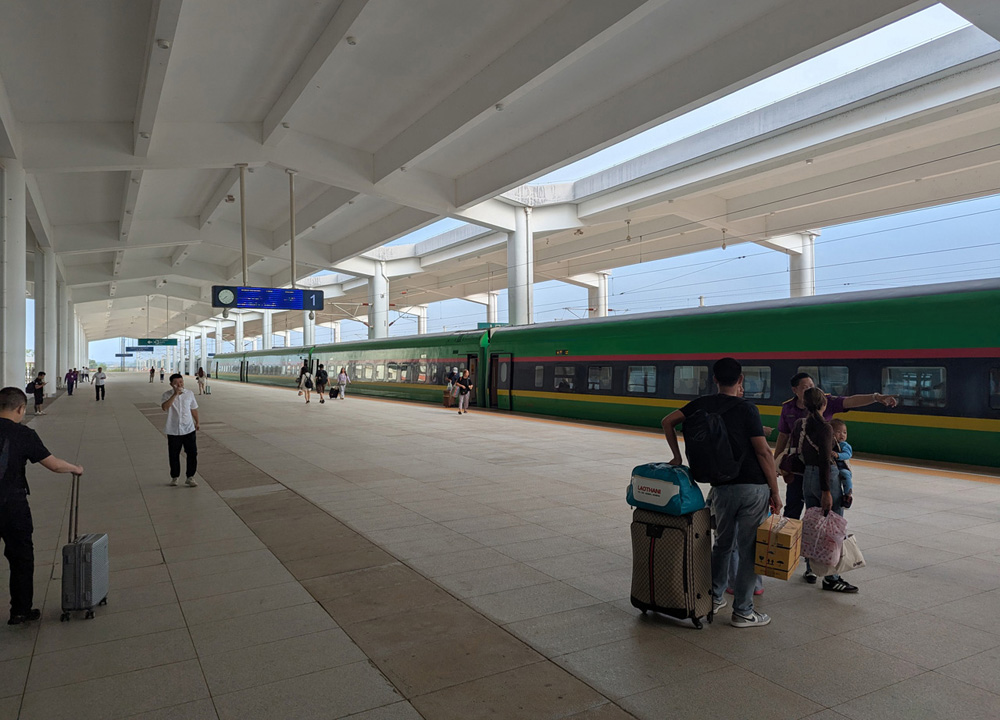
Before You Travel: Laos and China eSIMs and Essential Apps
Laos eSIM: I’ve been to Vientiane a bunch of times, but on this trip I had just one day and no mobile data. I still managed to get lost finding my hotel and ended up paying for hotel taxis. With a Laos eSIM on Trip.com, I could have used maps and booked a cheaper LOCA ride. Even for one day, I’d sort data before arriving.
China eSIM: This one I definitely wouldn’t skip. I use Trip.com’s China eSIM listings; compare the current plans before leaving Laos so you’ve got maps, translation and ride-hailing ready in Kunming. Check coverage and app access before buying, as plans differ.
Apps and documents: Download LOCA for Laos and set up Alipay, WeChat, Amap and DiDi for China while you still have reliable Wi-Fi. Keep your passport, train booking and hotel address (ideally in Chinese) handy, and save an offline copy in case mobile data lets you down.
Where to Begin: Starting Your Laos to China Train Journey
I’ve travelled by rail all the way from Singapore towards China, but the easiest places to join the Laos–China Railway are Vientiane, Vang Vieng and Luang Prabang.
All three make worthwhile stopovers if you want to explore Laos rather than rush through it. Check which services stop where using the current timetable and book separate legs if you plan to stay overnight.
Along the route, you can begin your journey in Vientiane, Vang Vieng or Luang Prabang, with Muang Xay (Oudomxay) another lesser-known option on some departures. Boten is the final stop in Laos before crossing into China. Check your particular train before booking, as not every service calls at Muang Xay.
Muang Xay is the stop that particularly intrigues me. I had barely heard of it before travelling this route. Have you visited Muang Xay or stayed there on the way to China? Feel free to share your experiences in the comments.
Local trains also serve smaller stations along the same line, including Phonhong, Kasi, Muang Nga, Namor and Nateuy. These are not stops on the international trains.
Vientiane to China by Train
Vientiane is the capital of Laos and the southern starting point of the Laos–China Railway. It makes a comfortable place to begin the journey, with riverside restaurants overlooking the Mekong, Buddhist temples, the Patuxai monument and evening markets. Spend a night or two here before heading north, especially if you are arriving from Thailand. For ideas, see our Vientiane city guide.
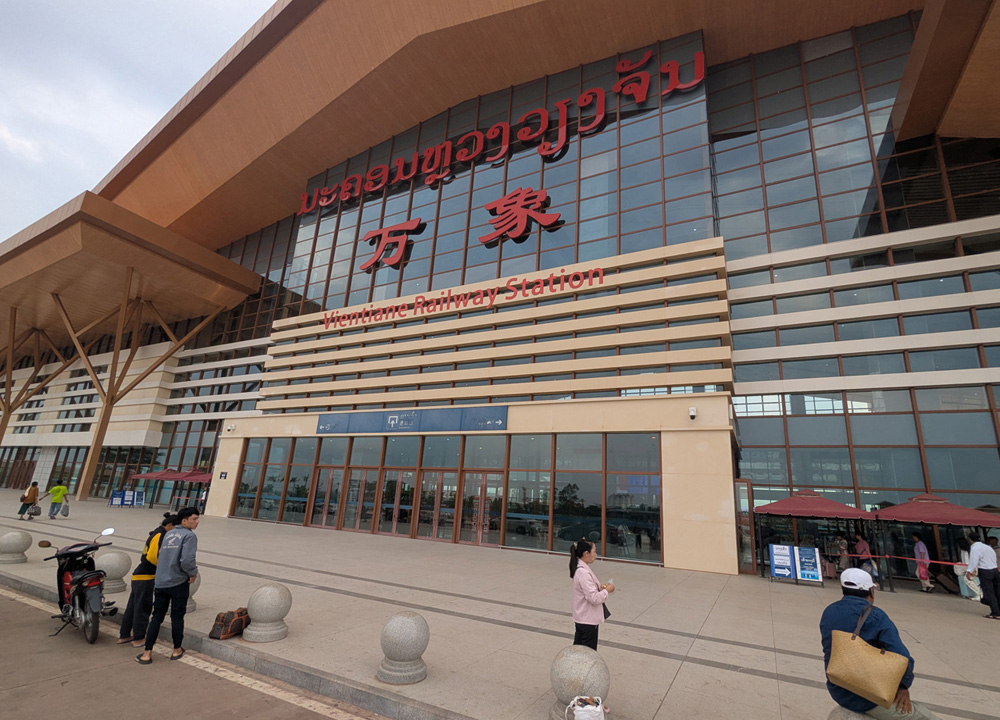
Getting to the train: Head for Vientiane Railway Station (Laos–China Railway, Don Noun), around 14–15 km northeast of the central riverside area. Allow roughly 30–45 minutes by taxi or hotel car, depending on traffic. A city bus service also connects the central bus station around Talat Sao with the railway station; check the operating times before relying on it for an early departure. Do not confuse this station with Khamsavath, which serves trains arriving from Thailand. Arrive well ahead of departure for ticket checks and security screening.


Vang Vieng to China by Train
Vang Vieng is the scenic adventure stop between Vientiane and Luang Prabang. Surrounded by enormous limestone karsts, rice fields and the Nam Song River, it’s a good place for kayaking, caves, viewpoints and relaxed days in the countryside. It’s particularly appealing if you’d rather break up the railway journey instead of travelling directly from the capital to China. You can also read our Vang Vieng riverside stay.
Getting to the train: Vang Vieng Railway Station is outside the town centre, around a 10–15-minute drive away. Guesthouses can usually arrange a shared minivan, tuk-tuk or private transfer; ask for the pick-up time and fare when booking. The train is not a convenient walk from most riverside accommodation, especially with luggage. International services to Kunming do call at Vang Vieng, but check the particular departure and available tickets.


Luang Prabang to China by Train
Luang Prabang is one of the highlights of any journey through Laos. Its UNESCO-listed old town combines historic temples, traditional wooden houses and colonial-era streets beside the Mekong and Nam Khan rivers. Allow time for the night market, the morning streets and a trip to the turquoise pools of Kuang Si Falls. It’s a wonderful place to spend several days before continuing north towards China.
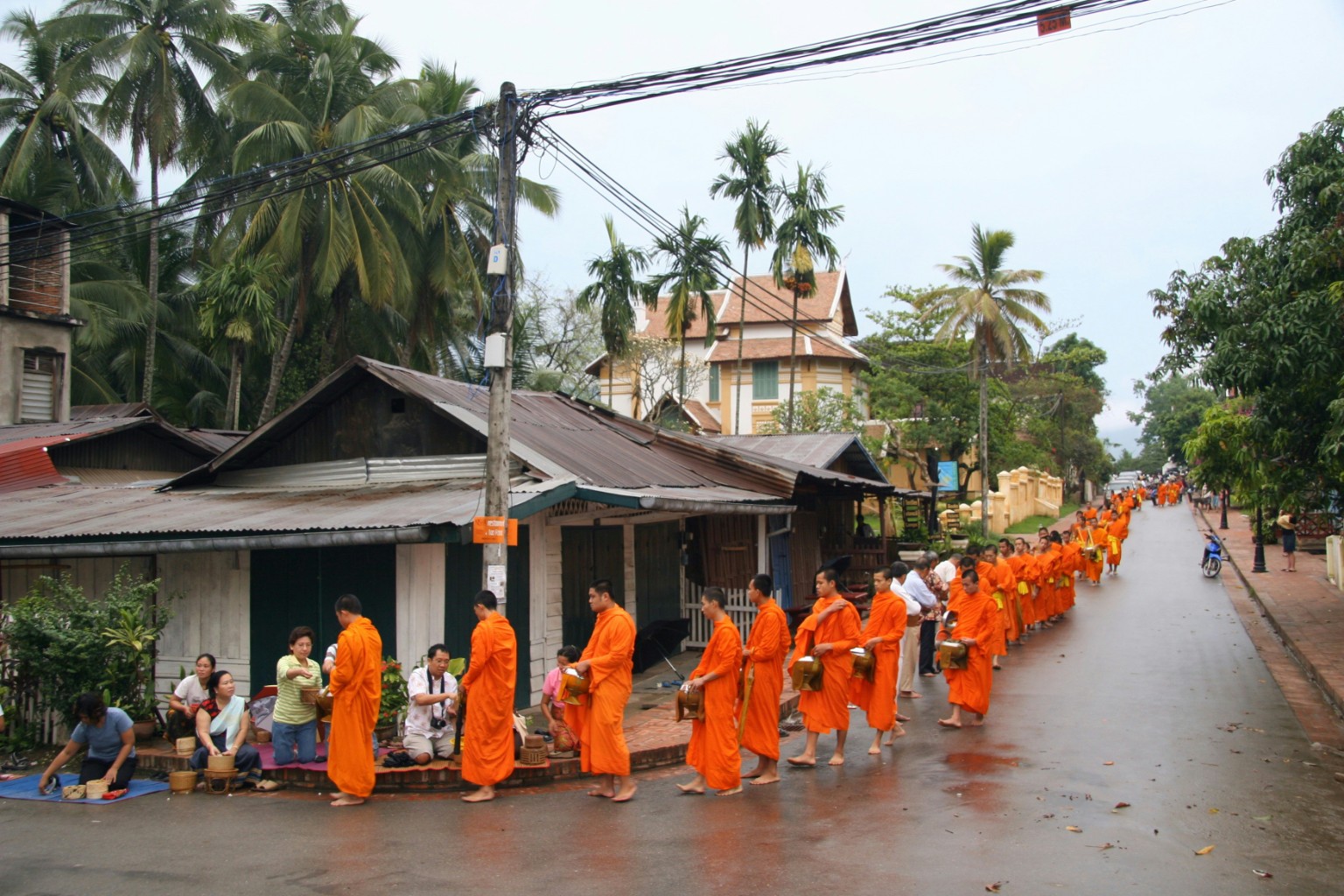

Getting to the train: Luang Prabang Railway Station is well outside the old town, approximately 12–15 km away, with the road journey commonly taking 20–30 minutes. Arrange a shared minivan, taxi or hotel transfer; guesthouses can generally organise collection for your departure. Allow extra time for the station entrance and security checks. The international Laos–China trains stop at Luang Prabang, making it possible to join the Kunming route here. The Luang Prabang tourism office provides station and access information.
Vientiane to Boten by Train: My Laos–China Railway Journey
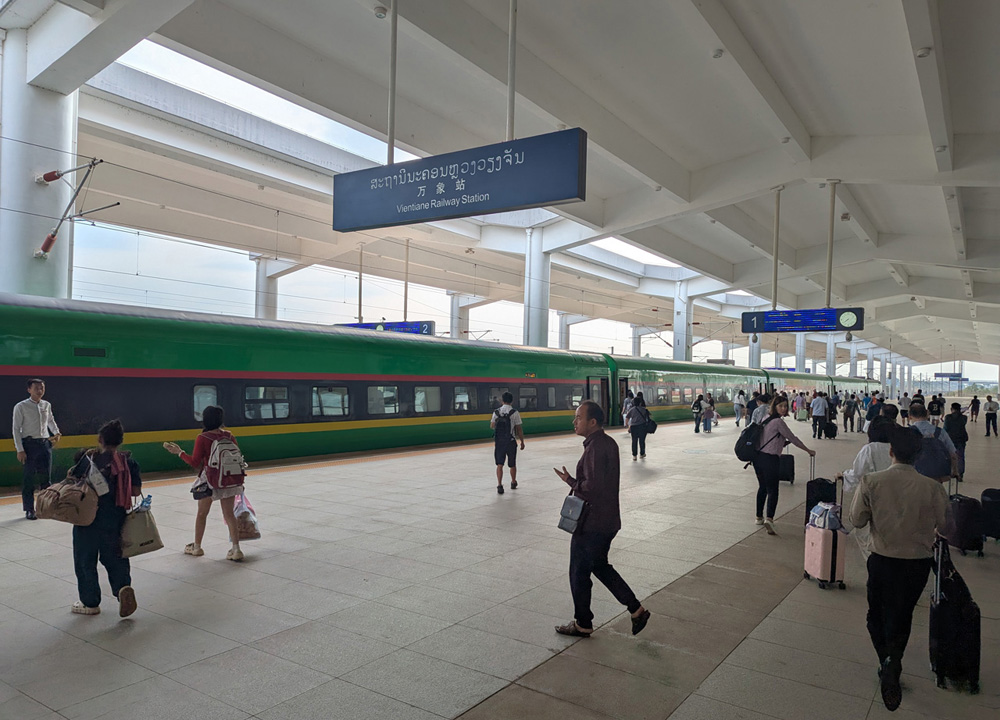
For my journey in April 2025, the train from Vientiane to China left the Laos–China Railway station at Don Noun at around 8:00 AM. This is not a station where you want to arrive five minutes before departure, particularly when you’re heading across an international border. It sits well outside central Vientiane, and you still have ticket collection, security and boarding to get through before you’re anywhere near your seat.
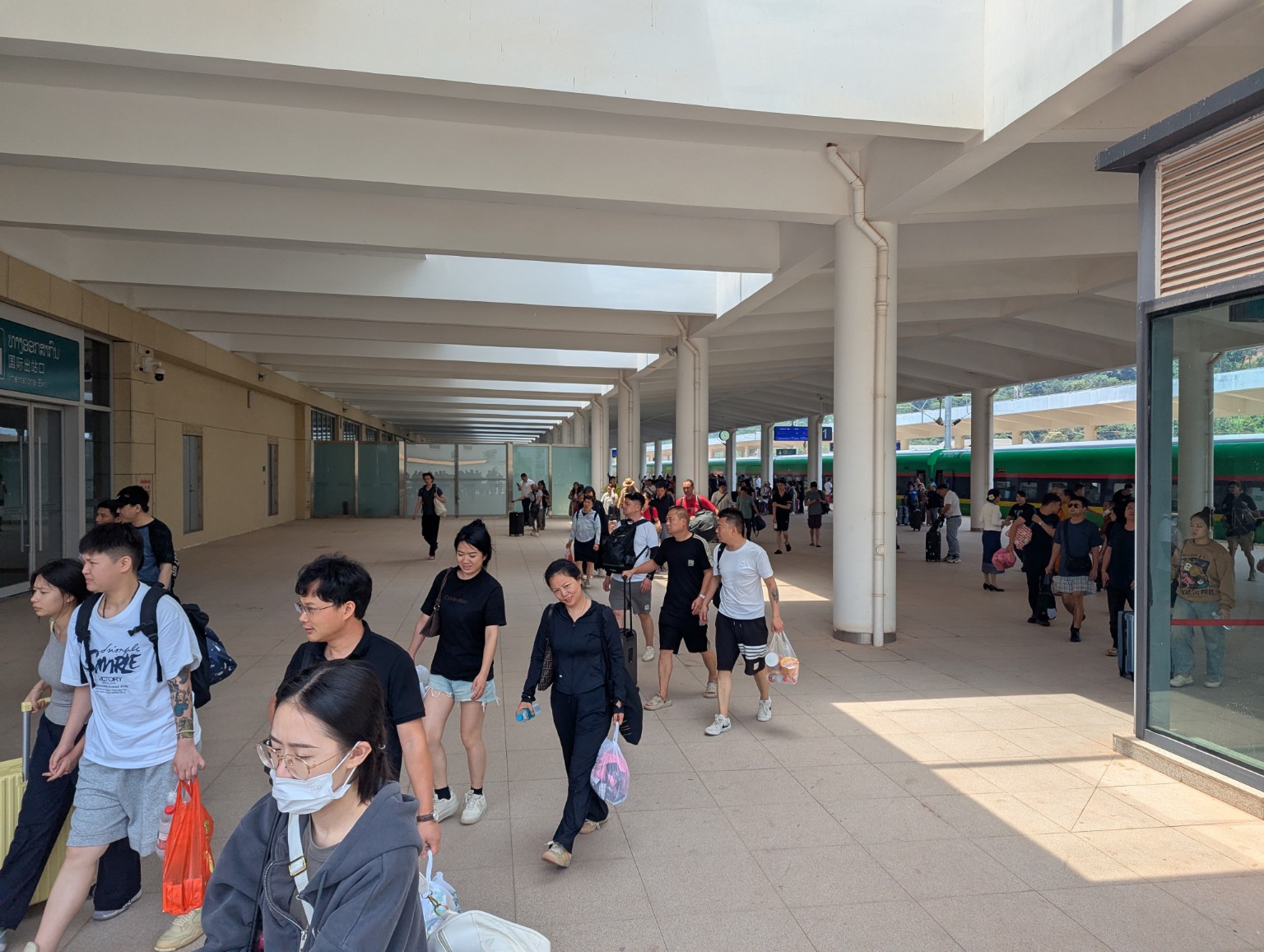
There was a 7:00 AM bus from the morning market, but I wasn’t in the mood to gamble the entire China journey on a bus connection. Instead, I booked a hotel taxi for around 300,000 kip (check current taxi fare estimates with LOCA). It took roughly 20–25 minutes to reach the station. That was my fare and journey time, rather than a guaranteed rate today, but it bought me a bit of peace of mind and a much more relaxed start to the morning.
One thing worth knowing is that booking a ticket and being ready to board aren’t necessarily the same thing. For the cross-border service you may need to exchange your online booking for a paper ticket at the station, using the same passport you booked with. Tickets and passports are checked again at the border, so keep both somewhere accessible rather than buried at the bottom of your luggage. Expect airport-style baggage screening at the station and leave time for queues. The Seat 61 Laos railway guide is useful for checking the latest ticketing arrangements and timetables.
For luggage, my suitcase fitted on the rack above my seat, so I could keep an eye on it. The official international train rules allow 20 kg per adult, with each item measuring no more than 130 cm across its three dimensions combined. There is no checked-baggage service on these international trains, so you need to carry your bags through security and both border checkpoints yourself.
First Class, Second Class and the Views
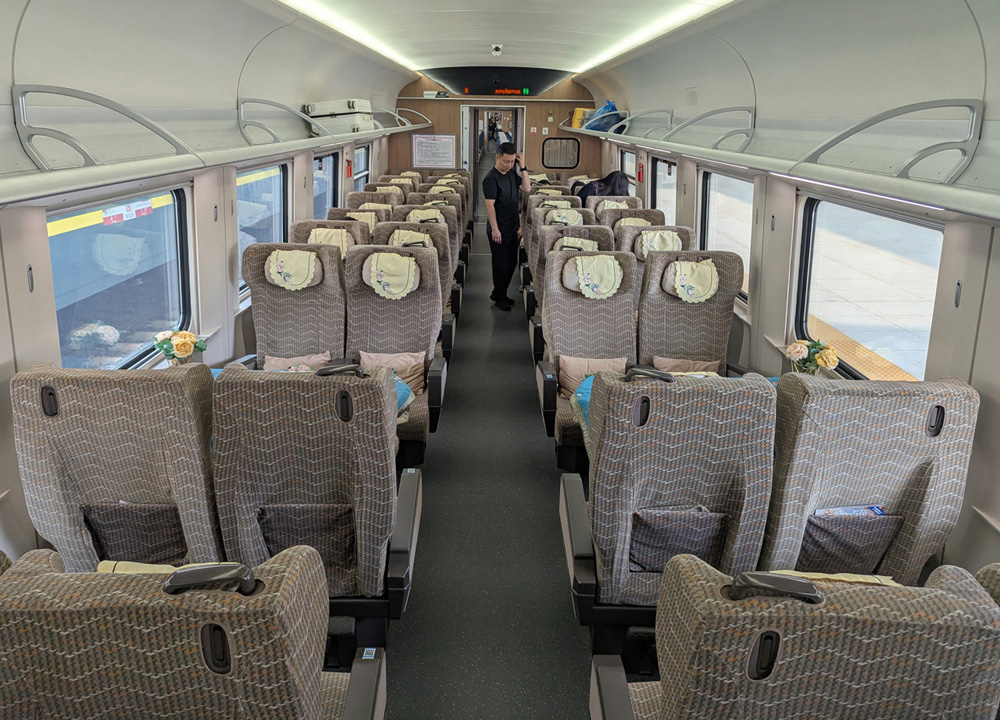
The complete journey to Kunming took me around nine and a half hours, including the border formalities, and I chose first class. I don’t normally feel the need to splash out on train travel, but the difference in price when I booked wasn’t enormous and the extra comfort felt worthwhile for a full day on the rails. You can compare current train prices by class through the official LCR Ticket app. Second class is still a perfectly sensible option if you would rather spend the money on food and hotels when you arrive.
I had a seat on the left-hand side, which I thought was particularly good for views as we travelled past Vang Vieng and Luang Prabang. There are limestone mountains, green valleys and rural scenery along the route, although the railway also disappears into a remarkable number of tunnels. You don’t get uninterrupted mountain panoramas for nine hours, but when the views open up they’re pretty spectacular.
My only slight mistake was that I was facing backwards. It’s a strange way to travel when you’re trying to look ahead to the next country, although I soon got used to it. If you’re particular about which direction you face, check whether the booking system actually shows seat orientation. I wouldn’t assume that choosing the left side guarantees the same views or direction on every train.
The carriage was relatively empty when I boarded in Vientiane, which made it feel like a fairly laid-back start to an international journey. That changed at Luang Prabang, where a lot more passengers got on, including holidaymakers heading back to China. It’s a good reminder that this isn’t just a tourist train between two capitals. It’s also an important link for people travelling between the towns and cities along the route.
A woman came through the carriage selling snacks and drinks, so there was no danger of going completely hungry. Still, for a journey this long I’d bring some food and water of my own rather than depend on what the trolley has left. There are toilets onboard, and reports of the international trains also mention power sockets beneath the seats — useful, although I’d charge my phone and bring a power bank anyway. With all those tunnels, mobile reception can disappear for stretches.

Boten Border Crossing: Leaving Laos by Train
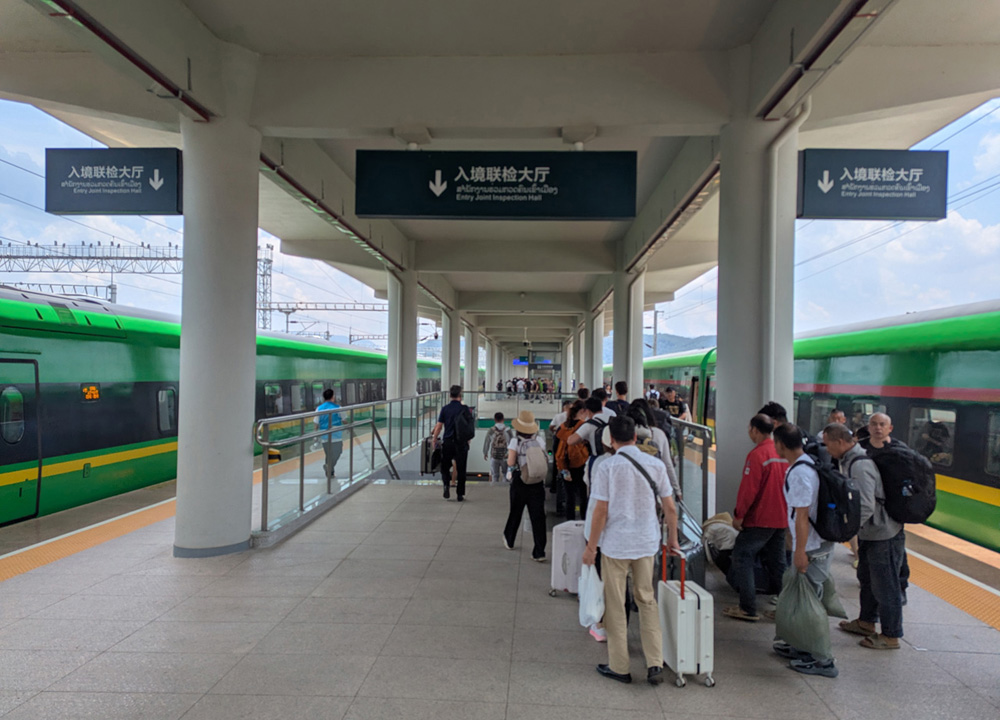
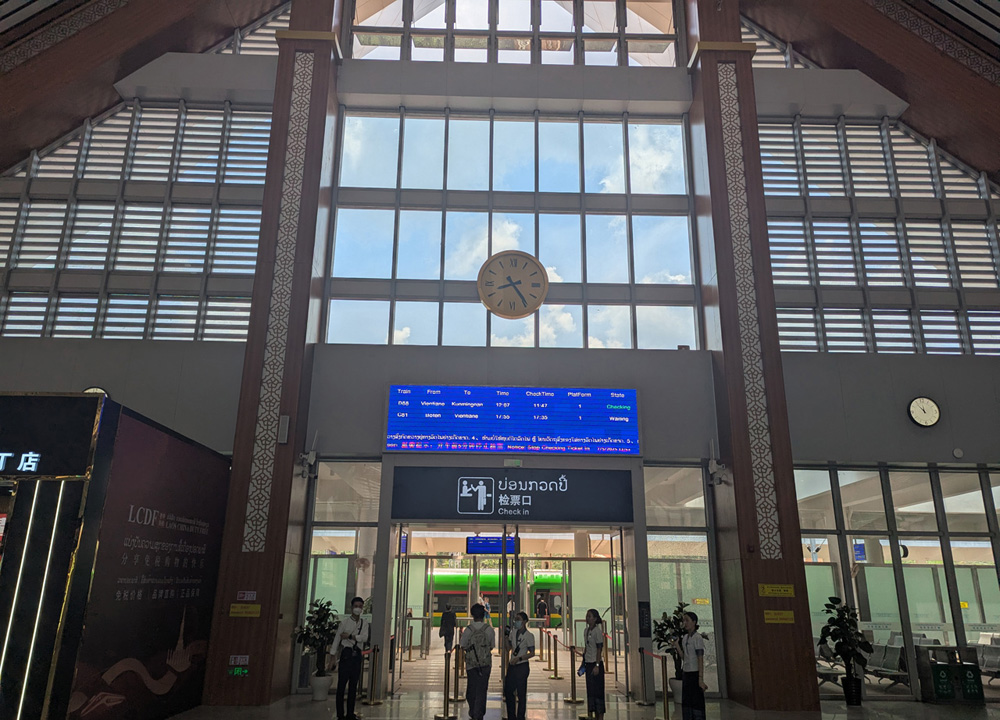
After roughly three hours and twenty minutes from Vientiane, we reached the Boten border crossing, the last railway station in Laos before China. This is where the journey stops feeling like an ordinary train ride. Rather than simply showing your passport to someone who walks through the carriage, everyone gets off with their luggage to complete Lao departure formalities.
I took my bags off the train, went through the immigration and security checks, and then boarded again once everything was cleared. It’s worth having your passport, paper ticket and any necessary travel documents ready before the stop, because you’re going to need them again on the Chinese side. The railway uses separate immigration checks in Boten and Mohan, rather than one combined border desk. The Lao Department of Immigration lists Boten as an international railway checkpoint.
I found the process straightforward, but it’s not something to rush or wander off from. Follow the railway staff and keep track of your train and belongings. Across both sides, the scheduled border checks account for a substantial part of the journey time. It also helps to remember that China is one hour ahead of Laos, so the clock changes even though you’re travelling straight across the border.
After Lao immigration, it was back on the train for the short run through the border tunnel towards Mohan — and another round of passport checks.
Chinese Visas: Between Boten and Mohan
Check the visa rules for your own passport before travelling, including whether they apply at the Mohan railway border. For short tourist visits, ordinary passport holders from the UK, Ireland, Australia, New Zealand, Canada, Japan, South Korea and many European countries currently qualify for up to 30 days visa-free in China. Most of these temporary arrangements are scheduled to expire on 31 December 2026, so check the latest rules for your travel date.
ASEAN passports: Travellers from Thailand, Singapore, Malaysia and Brunei also have visa-free arrangements for short visits, generally up to 30 days. Other ASEAN nationalities, including Indonesia, the Philippines, Vietnam, Laos, Cambodia and Myanmar, should not assume the same exemption applies. Separate group-tour, transit or regional arrangements are not necessarily valid for this train border crossing.
I crossed on my Irish passport in April 2025, when my British passport had different entry conditions. That has since changed. The most useful check is the official Chinese visa-free policy, the China–Thailand visa arrangements and the National Immigration Administration. Arrange any visa or arrival declaration required before leaving Laos.
Mohan Border Crossing: Entering China by Train
After completing the Lao departure formalities at Boten, it was back on the train for the short crossing into China. The route passes through the border tunnel towards Mohan, where everyone gets off again, this time for Chinese immigration and customs. If you thought you were finished carrying your luggage around, think again. I had to bring everything off the train for a second round of checks.
Fortunately, my arrival in April 2025 was relatively painless. We were handed immigration forms near the beginning of the journey, including the Chinese arrival card, so I filled them in on the train rather than scrambling for a pen at Mohan. If you don’t receive one onboard, ask the railway staff or immigration officers at Mohan about the current arrival declaration procedure, which may also be available online. There were fewer foreign travellers in my queue than Chinese and Lao passengers, and my own passport check took roughly 20 minutes. That’s what happened on my train, not a promise of a 20-minute border crossing every time.
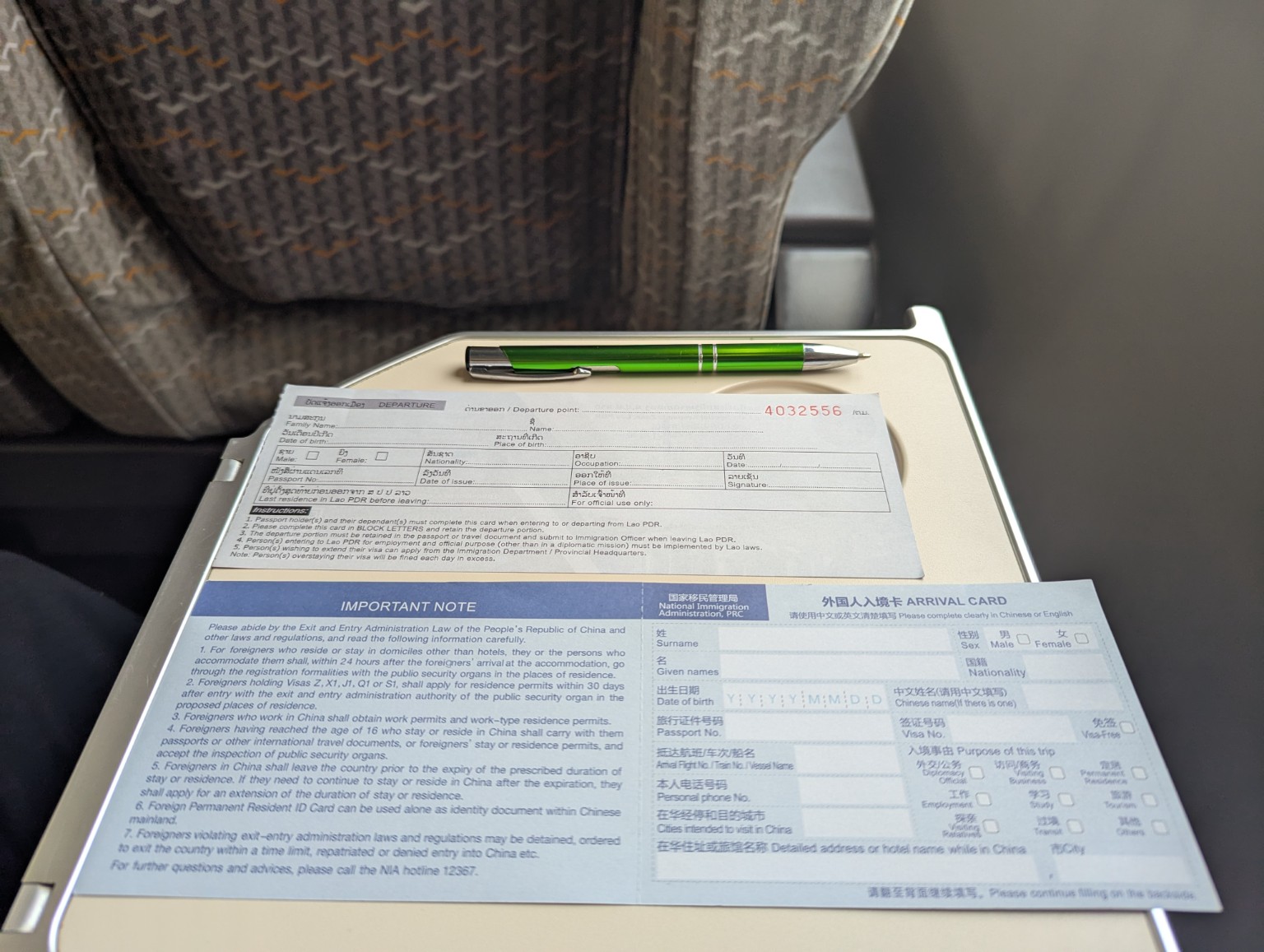
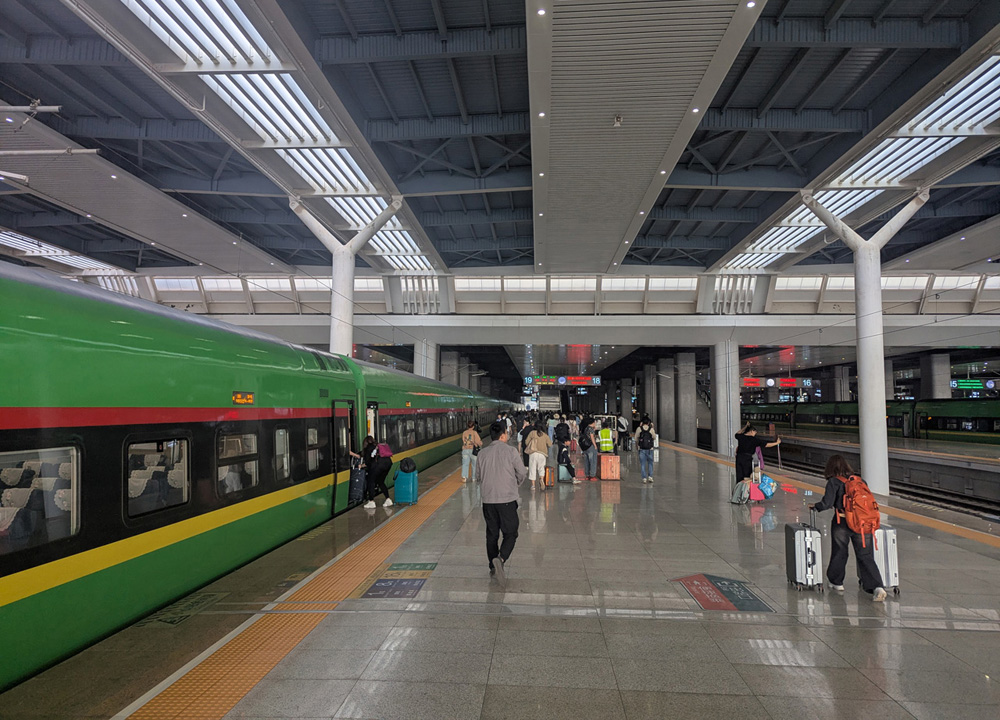
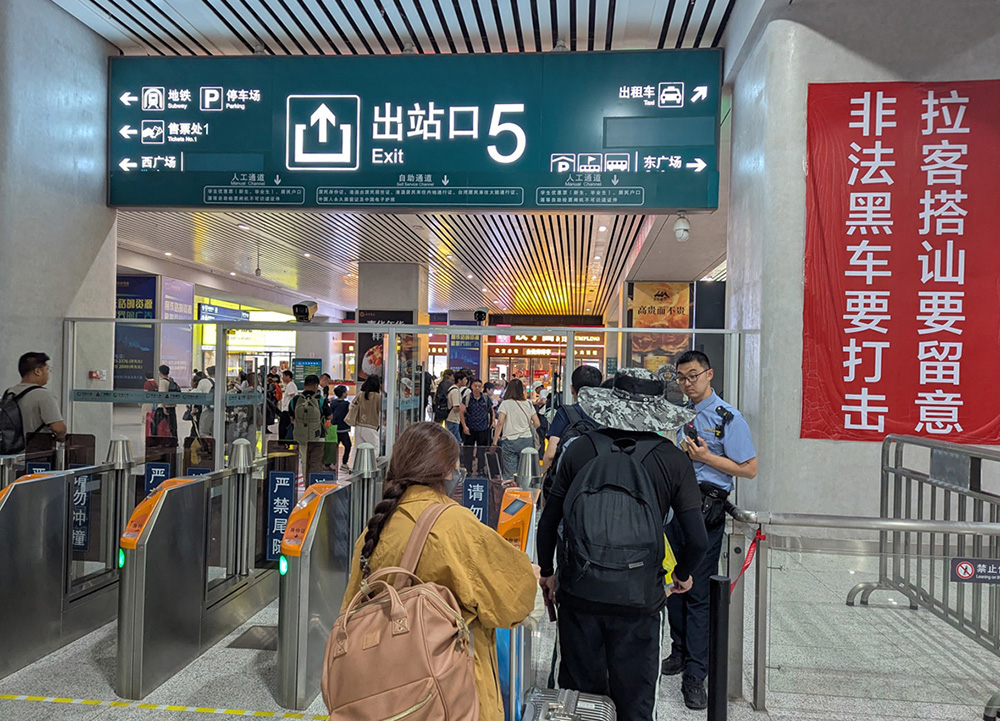
For travel now, China also offers a free official online arrival card, introduced in November 2025. You can submit it before reaching Mohan, or complete the declaration at the border where paper forms remain an option. Avoid unofficial sites charging for the service. This is newer advice rather than what I personally did in April 2025.
Mohan to Kunming by Train: The Journey through Yunnan
Once Chinese immigration was behind me, I was rather glad to settle back into my seat. No more borders, no more hauling bags through passport control — just the railway heading deeper into Yunnan. From Mohan, my remaining journey to Kunming took roughly four and a half hours, with stations along the way as other passengers joined and left the train.
This is where the journey begins to feel like a proper introduction to China. The railway runs north through southern Yunnan, with mountainous countryside and the region around Xishuangbanna before continuing towards Kunming. The route includes tunnels and bridges as well as stretches of open landscape. Actual intermediate stops depend on the train you book, so it’s worth looking at the full station list rather than expecting every service to call everywhere.
Arriving at Kunming South Railway Station
My Laos to China train finished at Kunming South (Kunmingnan), a major high-speed railway station on the outskirts of the city. Don’t confuse it with Kunming Railway Station nearer the centre. This is the point where my Laos to China train journey was officially complete, although there was still the small matter of getting to wherever I was staying.
For an onward journey or a hotel transfer, check which Kunming station you actually need. Kunming South connects with the city’s metro network, and taxis and app-based rides are options too. Having an eSIM or mobile data, Alipay set up with a payment card, and my destination saved in Chinese made things a lot easier for me. I didn’t use Lao kip or Chinese yuan on this trip: I used Thai baht in Laos and Alipay in China. I did carry some leftover yuan from an earlier visit as a backup, although I never needed it. I’d still recommend having a fallback payment option, since not every vendor accepts the same methods. I wouldn’t want to arrive at an unfamiliar station, with no connection, and attempt to translate a hotel address from memory.


Continuing through China by train? For onward high-speed journeys from Kunming, compare current services and seat prices through official China Railway 12306 or Trip.com China train bookings. Trip.com may charge a booking fee, so compare the final total. These domestic China tickets are separate from the international Laos–China service.
Onward Train Travel from Kunming
You can treat Kunming as the end of the trip, but for me it has always felt more like the start of another one. Yunnan is one of my favourite parts of China, with a completely different atmosphere from the bigger eastern cities. The historic old town of Lijiang and the mountain scenery around Shangri-La are particular highlights, and I cover both in my Yunnan itinerary.
On this particular journey, I continued north towards Chengdu and Chongqing in Sichuan and neighbouring Chongqing Municipality. Think pandas, enormous cities and fiery Sichuan hot pot. Or you can continue by rail to destinations further afield, including Shanghai, Beijing and Hong Kong. Train times and connections vary, so check the China Railway booking website or your preferred booking app instead of relying on old journey times.
Essential Apps and Travel Tips for China
I’d have been a lot less relaxed arriving in Kunming without a working phone. I normally arrange a China-compatible eSIM before travelling, and I check carefully what data and roaming it includes. Some travel eSIMs route data differently from domestic SIMs, which can affect access to familiar apps, but don’t assume that every eSIM automatically includes a VPN or unrestricted internet.
For the railway itself, check LCR Ticket for booking in Laos and China Railway 12306 for onward journeys in China. Trip.com can also be convenient for bookings. I keep Alipay and WeChat ready for payments and communication, Amap (Gaode Maps) for finding my way around, and DiDi for rides. Trip.com is also handy for hotels and onward trains, with Laos eSIMs and China eSIMs available too. Download and set things up before leaving Laos, while you’re not depending on railway Wi-Fi or uncertain mobile coverage.
I’d also pack a power bank and save key bookings and addresses offline. Charging sockets and Wi-Fi availability can differ between train services and classes, so I wouldn’t make either essential to my plans. With the boring practicalities sorted, arriving in China by train is a rather brilliant way to begin the next part of the journey.
Frequently Asked Questions: Laos to China by Train
Can you travel directly from Laos to China by train?
Yes. Direct international trains run between Vientiane and Kunming, stopping at selected stations such as Vang Vieng and Luang Prabang. The Lao section of the railway opened in December 2021, but through international passenger trains began on 13 April 2023. The current timetable is available in the Seat 61 Laos railway guide.
How long is the train from Vientiane to Kunming?
Allow roughly 9½–10 hours, including the immigration stops at Boten and Mohan. The trip time varies by service and by whether you finish at Kunming South or Kunming main station. Remember that China is one hour ahead of Laos.
Do you change trains at the Boten–Mohan border?
No, not on a direct international service. You leave the train with your luggage for Lao exit checks at Boten, reboard for the short trip to Mohan, and get off again for Chinese immigration and customs before continuing on the same train. Domestic services are a different matter, so check the train number before booking.
How do you book Laos to China train tickets?
I used the official LCR Ticket app for my journey from Laos. For China-origin international tickets, use China Railway 12306. According to the official cross-border ticket rules, the advance booking window is 15 days and online cross-border bookings must be exchanged for paper tickets before boarding. Use the passport you booked with.
Do I need a visa to enter China by train from Laos?
That depends on your passport, purpose of visit and length of stay. As of November 2026, ordinary British and Irish passport holders can visit China visa-free for eligible stays of up to 30 days, under policies currently running to 31 December 2026. Check the UK entry guidance or the Chinese Embassy in Ireland before your departure, particularly for travel in 2027 or later. Other nationalities have different rules.
Do I need to fill in a Chinese arrival card?
Many foreign visitors do. Since November 2025, China has provided a free online arrival-card service. You can complete it in advance where required, or follow the immigration staff’s instructions at Mohan; paper arrival cards remain available. On my April 2025 journey, we were given paper forms aboard the train.
Is there a sleeper train or a first-class option?
The direct international services have first- and second-class seats, not sleeper berths. I travelled first class, although both classes are a far cry from the older third-class and sleeper train adventures I was used to in Thailand. Check the live fares in the booking app rather than relying on old price lists.
Which station in Vientiane is used for trains to China?
Use Vientiane Railway Station at Don Noun, northeast of the city centre. It is not Khamsavath station, which serves Thailand–Laos rail connections. Arrange transport and leave enough time for ticket collection and security checks.