
Contents
Key Highlights
- Long-term car rental Melbourne often starts at 30 days, while short-term car hire is better for brief needs.
- Your rental duration shapes the price, with monthly car rental usually giving better value over time.
- Long-term rentals suit relocations, work placements, and times when your own car is unavailable.
- Short bookings fit weekend use, while rental cars for longer stays reduce daily pricing swings.
- Fleet choice matters, from compact cars to commercial vehicles for work or family needs.
- Flexible car hire can help when plans shift, and you want transport without ownership pressure.
Introduction
Choosing between long-term car rental Melbourne and a short booking can feel harder than it should. You want value, flexibility, and a car that fits your routine. For Melbourne locals and visitors alike, the right option depends on how long you need it, how often you drive, and which car rental services match your day-to-day needs.

Understanding Long-Term vs Short-Term Car Rental in Melbourne
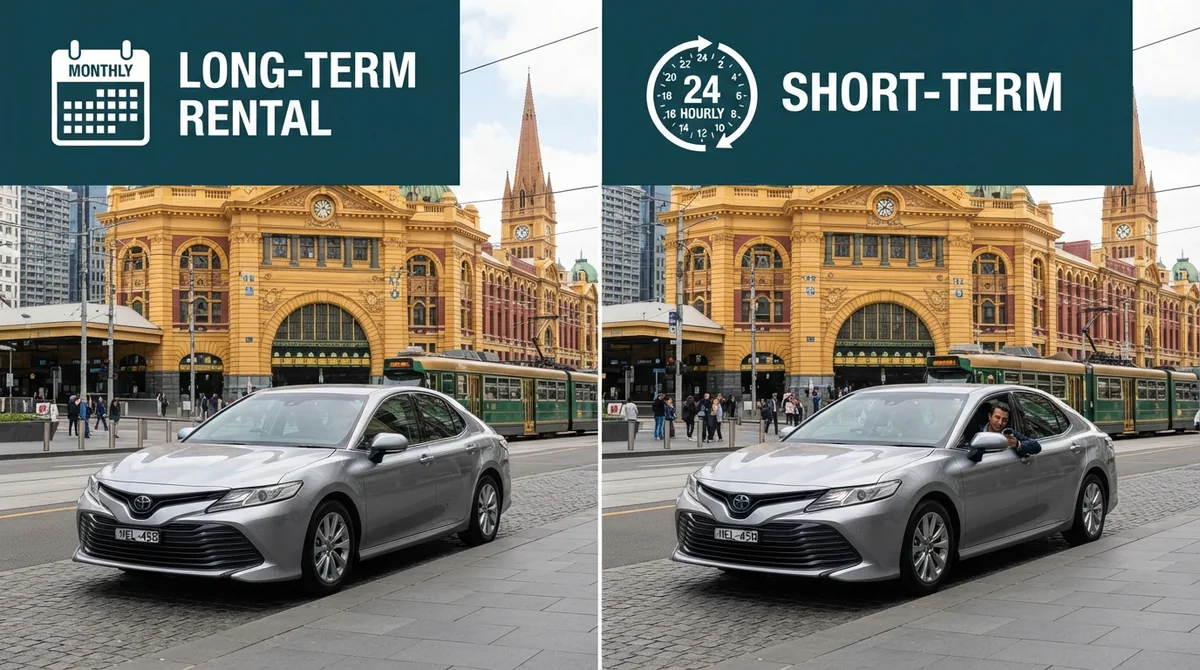
The main difference is simple: long-term car rental Melbourne is for 30 days or more, while short-term car hire covers brief use. Your rental duration changes both price and flexibility.
In Melbourne, rental companies offer both types of vehicle rentals. The better choice depends on whether you need a car for a few days, a transition period, or several months. That is where the details start to matter.
What Defines a Long-Term Car Rental in Melbourne?
In Melbourne, long-term rentals usually mean keeping a vehicle for more than 30 days. That makes them useful when your transport needs are ongoing but not permanent.
Many rental companies let you rent month to month instead of locking you into a long contract. That gives you room if life changes, role changes, or travel plans shift without warning.
The best options depend on what you need to drive. Some people want compact cars for city use, while others need SUVs, luxury vehicles, or commercial vehicles for work around Victoria. Matching the vehicle to the rental duration is what matters most.
Key Differences Between Long-Term and Short-Term Rentals
Short answer: long-term rentals are usually better for longer stays because they can lower the daily rate and give steadier costs. Short-term car hire works best when you only need rental cars for a brief and fixed period.
That difference becomes clearer when you compare how each option works in real life.
- Short bookings are useful for weekend trips or a few days in the city.
- Long-term rentals can reduce the volatility of daily pricing over time.
- Short-term car hire suits fixed dates, while longer bookings suit changing plans.
- Long hires often fit people who need reliable transport for work or family routines.
Why Choose Long-Term Car Rental in Melbourne?
If you need a reliable car for weeks or months, long-term rentals can make day-to-day life easier. You avoid the pressure of a long commitment while still keeping access to regular transport.
There is also the cost angle. Compared with car ownership and its major financial outlay, car hire through rental companies may offer better rates, fewer upfront expenses, and less hassle during a temporary stay.
Typical Use Cases: From Extended Business Trips to Relocations
A long booking makes sense when your need is real but temporary. Think of someone on an extended business trip in regional Victoria, or a family handling a relocation before buying a new car.
It also helps when everyday life cannot wait. Public transport may not suit school runs, long trips, or jobs that need tools and stock.
Common use cases include:
- Extended business trips across Melbourne and regional areas
- Relocations during a transition period
- Temporary use while your own car is in the shop
- Commercial vehicles for projects and moving equipment
That flexibility matters most when plans change and you do not want to restart the whole process.
Cost Benefits and Predictable Expenses Over Time
For many drivers, the biggest benefit is predictable expenses. Monthly car rental can be easier to manage than car ownership because you avoid a major financial outlay and ongoing registration renewals.
That does not mean buying is always wrong. It means long-term hire can be a practical fit when you only need a car for 1 to 11 months.
Option
Cost Pattern
Monthly car rental
Regular payments, fewer upfront expenses, easier to adjust if needs change
Car ownership
Major upfront expenses, ongoing costs, more commitment over time
Short-term hire
Higher daily rate risk over longer periods due to daily pricing changes
This is why many people choose long-term rentals when steady budgeting matters.
Important Considerations for Melbourne Car Rentals
Price matters, but it is not the only thing to check. Before you book rental cars, look at your rental duration, vehicle type, and what support comes with the hire.
A strong package may include roadside assistance, mechanical breakdown assistance, and a top-notch customer service team. These details can save you stress once you are already on the road.
Average Monthly Rates and Potential Savings for Long-Term Hire
Exact pricing depends on the vehicle class, rental duration, and any inclusions — so the clearest way to compare is a personalised quote rather than a fixed number. What you can rely on is the savings mechanism itself: booking by the month brings the per-day cost down well below what the same car would cost on a one-off daily hire, since short-term rates carry a premium that long-term pricing is designed to avoid.
When comparing quotes, check whether insurance, roadside assistance, and kilometre allowance are included or charged as extras — this affects the real cost more than the headline price.
Documentation, Insurance, and Requirements for Rental
Getting approved is usually simple, but you still need the basics ready. For long-term hire in Melbourne, drivers generally must be 21 or older and have held a valid driver’s licence for at least one year.
You may also need a few extra documents or add-ons depending on the booking.
- A valid driver’s licence and sometimes an international driving permit
- A credit card and proof of address
- Details for additional drivers if more than one person will drive
- Optional extras such as child seats, depending on your needs
Insurance may be included in the rental arrangement, but inclusions can vary. It is smart to confirm this before booking, along with any special conditions for luxury vehicles.
Conclusion
In conclusion, choosing between long-term and short-term car rental in Melbourne hinges on your individual needs and circumstances. Long-term rentals offer significant advantages, such as cost savings, flexibility for various use cases, and predictable expenses that suit extended stays or relocations. Understanding the nuances between these options allows you to make an informed decision that aligns with your lifestyle. Whether it’s for business or personal use, opting for a long-term rental can provide you with the freedom and convenience you need. If you’re ready to explore your options further, consider booking a free consultation to find the perfect rental solution tailored to your needs.
Frequently Asked Questions
Is long-term car rental more cost-effective than buying a car in Melbourne?
It can be, especially if you only need transport for a few months. Car hire avoids the major upfront cost of car ownership, and monthly car rental can give more predictable expenses than buying, registering, and maintaining a rental car or a new vehicle.
Are there restrictions or special requirements for long-term car rentals in Melbourne?
Yes. Rental companies usually ask for a valid driver’s licence, proof of address, and a credit card. Some vehicles have extra conditions. If plans change, check the terms first, so you understand extensions, returns, and any hidden fees.
Can you arrange long-term car rental at Melbourne Airport with unlimited mileage?
You can arrange long-term rentals from Melbourne Airport, but unlimited mileage depends on the rental companies and vehicle type. Before you confirm, ask what the quote includes, whether kilometre limits apply, and if pickup terms differ by location.