
A trip can produce thousands of photographs and still leave you without a clear sense of the journey. There may be sunsets, meals, landmarks, hotel rooms, street scenes, and quick snapshots made through a car window, all competing for attention in one enormous folder. Each image may preserve a fragment of memory, but a collection becomes more meaningful when those fragments begin to work together.
Creating a travel photo collection is less about recording everything than noticing what gives the trip its particular character. Mexico offers an extraordinary range of subjects: crowded cities, quiet villages, archaeological sites, markets, mountain roads, coastal landscapes, family restaurants, contemporary architecture, and everyday routines. The challenge is deciding which photographs tell your version of the experience.
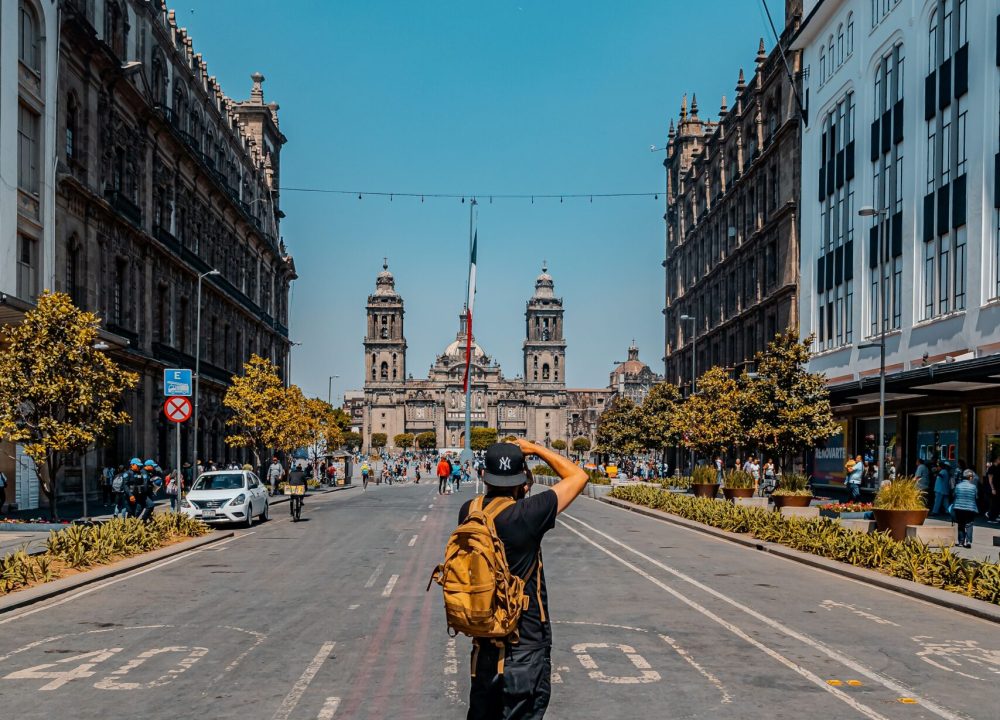
That process can begin before you leave home. Think about what drew you to the trip beyond a list of destinations. Perhaps you are interested in regional food, public art, historic neighborhoods, landscapes, local craftsmanship, or the contrast between old and new.
A loose theme gives your attention somewhere to return without turning the trip into a rigid assignment. Write the idea in one sentence. It might be as simple as, “I want to photograph how each place begins its day,” or, “I want to show how color changes between the coast and the interior.”
The sentence does not need to cover everything you will encounter. Its purpose is to help you recognize connections. Remain willing to change the idea once the trip begins.
You may arrive expecting architecture to become the main subject and discover that you are more interested in roadside businesses, shared meals, or evening activity in public squares. Following that interest is not a failure of planning. It is evidence that you are paying attention.
The opening of the journey deserves photographs of its own. Make pictures of preparation, departure, luggage, maps, tickets, the first meal, or the view as you arrive. These images may seem ordinary at the time, but they give the final collection a beginning.
A story feels more complete when it shows anticipation before presenting the major destinations. Establishing photographs help the viewer understand where the experience takes place. These may include a broad city view, a road entering a town, a market hall, a mountain landscape, or a stretch of coastline.
They provide orientation, but a collection made entirely of wide views can feel distant. Move closer after establishing the scene. Look for human activity, objects, signs, textures, and gestures.
A vendor arranging fruit, chairs being placed outside a café, a hand holding a transit ticket, or light crossing a tiled floor can make the experience feel immediate. Small details often trigger stronger memories than the most famous view. Try to photograph each important setting at three general distances: wide, medium, and close.
A wide frame introduces the environment. A medium image shows the relationship between people and place. A close detail reveals something that might otherwise be missed.
This habit naturally creates visual variety without requiring a complicated shot list. Transitions matter as much as destinations. Photograph the road, bus station, airport corridor, ferry, sidewalk, or trail that carried you from one place to another.
Include moments of waiting and movement. These pictures connect the major scenes and prevent the final story from feeling like a collection of unrelated postcards. Photographs through windows and mirrors can help communicate travel.
Reflections may layer the vehicle interior over the passing landscape, while rain, dust, or motion blur can convey the conditions of the journey. Do not worry if every transitional image is not perfectly sharp. Technical imperfection can sometimes express movement better than a frozen frame.
Safety should guide how these photographs are made. Never take pictures while driving, stand in traffic, or stop where parking is unsafe. If you are a passenger, avoid distracting the driver.
A scene may be fleeting, but no photograph is worth creating a hazard. Time of day can provide another structure for the collection. Early morning introduces streets before they become crowded, vendors beginning work, and softer light on buildings.
Midday reveals strong shadows, heat, activity, and bold color. Evening brings illuminated signs, shared meals, public gatherings, and reflections. Photographing throughout the day gives your collection an internal rhythm.
If every image is made during golden hour, the trip may look beautiful but strangely disconnected from ordinary time. Harsh sunlight, overcast skies, and artificial light all belong to the experience. Weather deserves a place in the story as well.
Rain may change the color of stone, clear a plaza, or cover a window with droplets. Fog can hide a mountain and simplify a crowded forest. Wind may animate fabric, trees, dust, or the surface of the water.
Instead of waiting for ideal conditions, photograph how the trip actually felt. Famous landmarks will naturally appear in many collections. Make the recognizable view, then spend time looking beyond it.
Photograph how people approach the site, the neighborhood surrounding it, and the details that distinguish your visit. A monument glimpsed between ordinary buildings can say more about its place in the city than a perfectly centered façade. Markets provide another rich layer of visual storytelling.
Begin with a wide image that shows the space, then focus on arrangements of produce, handwritten signs, food preparation, and exchanges between vendors and customers. Remember that a market is a workplace. Avoid blocking aisles or interrupting transactions, and ask permission before making close portraits.
Food can mark the stages of the journey. Photograph more than completed plates. Include ingredients, menus, tables, cooking tools, signs, and the setting in which the meal is served.
An empty cup at the end of breakfast or a nearly finished dish may communicate memory and companionship better than a flawless overhead arrangement. People often bring the greatest emotional depth to a travel collection, but they should be photographed with care. A broad public scene is different from a close portrait of a recognizable person.
When someone is the clear subject, ask permission. A greeting, brief explanation, and respectful response to either yes or no can shape the interaction. If someone agrees, work efficiently and show the image when appropriate.
Do not ask people to hide signs of modern life, adopt a “traditional” pose, or perform a simplified version of their culture. Contemporary clothing, phones, vehicles, businesses, and architecture are part of Mexico’s present. Photograph family and travel companions during ordinary moments as well as posed ones.
Someone reading a map, laughing during a meal, resting after a long walk, or looking through a bus window may express the trip more naturally than another group lined up in front of a landmark. These images give the collection a personal center. Remember to include yourself.
That does not require appearing in every location or making elaborate self-portraits. Your reflection, shadow, hands, or belongings can quietly acknowledge your presence. Ask a companion to photograph you occasionally, especially during activities you will want to remember from a participant’s perspective.
Create recurring visual threads. A color, type of doorway, mode of transportation, morning coffee, street dog, road sign, or family gesture can reappear throughout the collection. Repetition gives distant locations a sense of connection.
The repeated subject should evolve with the trip rather than becoming a forced checklist. Sound and smell cannot be photographed directly, but visual clues can suggest them. A musician’s hands, speakers outside a shop, steam rising from a kitchen, flowers in a market, or rain striking a metal roof can awaken sensory memories.
Look for the details that imply what the camera cannot record. Keep notes while traveling. Record location names, foods, events, people, and short memories that photographs alone may not explain.
A few sentences at the end of the day can preserve details that disappear quickly. Voice notes are useful when writing feels like a burden. Accurate information becomes especially important if you intend to publish or license the images.
Anyone hoping to create high-quality stock photos should record precise locations, subject descriptions, and relevant permissions. Capture horizontal and vertical variations when doing so fits the situation, and make some compositions with uncluttered space that could accommodate text. Recognizable people may require releases for particular commercial uses, while private property, protected artworks, trademarks, interiors, and restricted locations can introduce other considerations.
Understand the intended use before describing an image as commercially available. Editorial and commercial photographs may need different treatment. Do not allow licensing needs to turn every experience into a production.
Make the useful variations, then return to observing. A personal frame with unusual cropping or imperfect motion may contribute more to the final story than another technically polished version of the same scene. Protect the work as the trip continues.
Back up photographs regularly using a dependable method and keep copies in separate places when possible. Organize memory cards so that you know which have been used, and do not format them until the files have been verified elsewhere. The routine may feel unexciting, but it protects the story you are building.
At the end of each day, review enough images to identify gaps without trying to complete the final edit. You may discover that you have many wide landscapes but few details, several meals but no preparation, or plenty of daytime pictures with nothing from the evening. This quick review can guide the next day’s attention.
Once home, give yourself some distance before making the final selection. The freshest memories can cause you to favor images because of what happened around them rather than what the photographs communicate. A little time makes it easier to judge the collection as a viewer would.
Begin with a generous selection, then remove obvious duplicates and weak frames. Group the remaining images by place, day, theme, or visual idea. Look for patterns you did not recognize while traveling.
You may discover that shadows, blue walls, shared tables, or transportation became an unplanned thread. Choose images for what they contribute, not simply because each one is attractive. A quiet doorway may provide a necessary pause between two busy market scenes.
A technically modest picture of a friend laughing may carry more emotional value than a flawless landscape. A transitional photograph can make the movement between destinations understandable. Avoid including five versions of the same idea merely because choosing among them is difficult.
Select the frame with the strongest composition, gesture, light, or narrative value. Repetition should reveal change or build rhythm. Otherwise, it slows the collection without deepening it.
The opening image should invite viewers into the journey. It might show departure, the first view of a destination, or a moment of anticipation. It does not have to reveal the most dramatic scene immediately.
Sometimes a quieter beginning creates curiosity. The middle can expand the world of the trip through landscapes, people, meals, movement, and details. Alternate visually dense images with simpler ones.
Change scale and pace. Allow certain photographs to answer questions raised by earlier images while introducing new ones. The final image should create a feeling of completion without needing to explain everything.
It might show the road home, luggage by a door, a final evening, an empty table, or one last distant view. An effective ending leaves the viewer with the emotional tone of departure. Editing should create harmony without making every place look identical.
Correct exposure, white balance, and distracting color shifts consistently, but preserve the differences between a shaded market, a misty forest, a bright coast, and a city at night. The changing atmosphere is part of the story. Use saturation and contrast carefully.
Mexico’s colors can be naturally vivid, and pushing them too far may erase texture, distort skin tones, and make the collection feel artificial. Edit people with particular care so that adjustments made for walls, skies, or food do not alter their appearance unnaturally. Captions can provide names, context, and memories the photographs cannot carry alone.
Keep them specific. Identify a location or activity accurately, and add a short observation when it contributes something meaningful. Avoid presenting one encounter as representative of an entire region or culture.
Consider creating more than one version of the finished collection. A concise sequence of twenty to thirty images may work well as a photo essay. A longer private album can include family snapshots, alternate views, and personal moments.
A small printed book can combine photographs with notes, maps, receipts, or brief stories. Printing changes the way a collection feels. Images become physical objects that can be arranged, compared, and shared without scrolling.
Even a modest set of prints can reveal whether the sequence flows and whether the colors work together. A printed photograph also has a permanence that suits the idea of bringing something home. The strongest travel collection will not necessarily include every destination or prove that every minute was productive.
It will preserve the character of the journey: what surprised you, what held your attention, who shared the experience, and how one moment led to the next. Mexico may provide the subjects, but the story emerges from your choices. Photograph the celebrated view and the walk toward it.
Record the meal and the hands that prepared it. Capture the landscape and the changing weather that shaped your day. Leave room for chance, conversation, and moments when the camera remains lowered.
When you return home, those choices will matter more than the number of files on a memory card. A thoughtful collection allows the viewer to feel movement, atmosphere, discovery, and connection. It does more than show where you went.
It brings home the story of what the journey became.