Contents
The lanes behind Macau’s Inner Harbour are quiet now. Shuttered shophouses, a few noodle places, a tour group photographing the paintwork. In the 1860s this was where the money changed hands: sixteen licensed gaming houses, most of them running fan-tan, a game that needs nothing more than a pile of buttons, a cup and a stick. The dealer covers a heap of buttons, removes them four at a time, and the table bets on how many are left at the end: one, two, three or four. You can pick it up from the doorway, which is roughly why it spread through every port on the South China Sea. A hundred and sixty years later the same trade is on a phone, dealt from a studio in the Philippines, having passed through some of the most expensive buildings ever put up in Asia.
The informal era
Gaming in the trading ports of the nineteenth century was an extension of trade itself. Sailors, coolies and merchants had cash and time between tides, and the fan-tan house, like the tea house beside it, was where a port did its socialising.
Governments treated it as a revenue question. Macau’s governor, Ferreira do Amaral, legalised fan-tan in 1849 to raise tax for a colony short of revenue. By the end of the 1860s there were records of sixteen licensed houses; by 1898 the fan-tan licences were producing more than a fifth of the city’s revenue, and by 1910 more than two fifths. Hong Kong went the other way, licensing gaming houses briefly in the 1860s, an experiment debated in the House of Lords in 1867, and then consolidating a ban in the Gambling Ordinance of 1891. In the Straits Settlements the British had auctioned “gaming farms” since the 1820s; by 1826 the gambling farm was the most lucrative of them in Singapore, nearly half of the tax-farm revenue, before the practice was abolished across the Straits in 1829. Where gaming was legal it sat in modest rooms near the waterfront, and where it wasn’t it moved a few streets back and carried on, for nearly a century.
The rise of Macau
Macau’s rooms stayed modest until the government decided otherwise. In 1937 it handed the whole business to a single company under licence; in December 1961 it awarded a new monopoly concession to Sociedade de Turismo e Diversões de Macau, STDM, a syndicate whose partners included Stanley Ho, Henry Fok, Teddy Yip and Yip Hon, and the new regime began operating on 1 January 1962. STDM put money into ferries and hotels as well as tables, and in 1970 it opened the Casino Lisboa, the first building in Macau that looked like a resort rather than a gaming house with rooms upstairs.
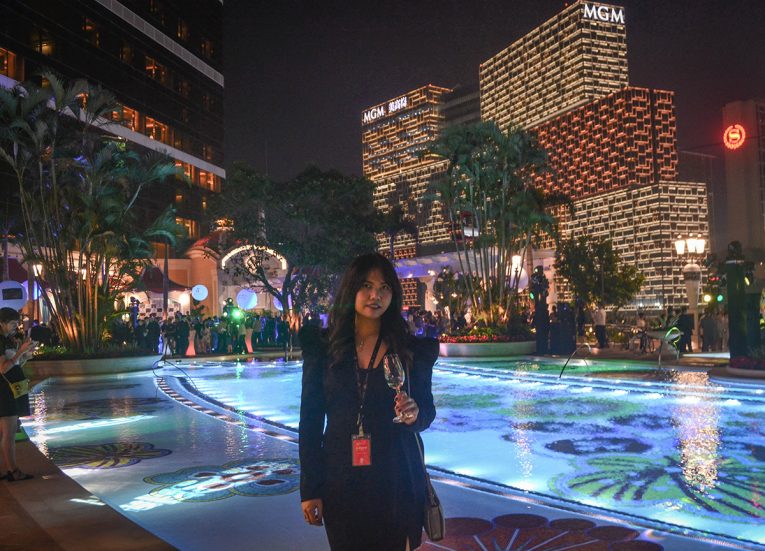
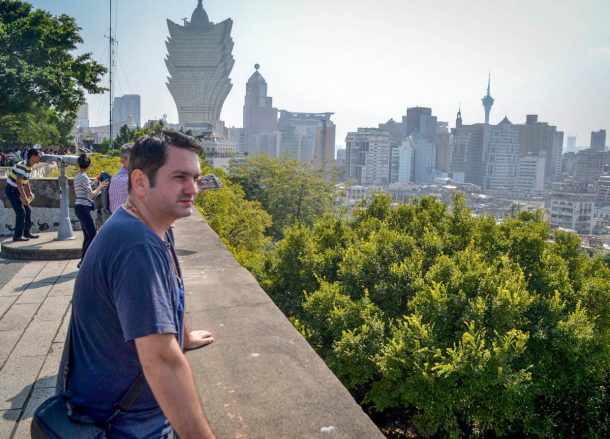
The second turning point was 8 February 2002, when the government ended the monopoly and awarded three concessions, later six once sub-concessions were added, several of them to American resort companies. Cotai, 5.2 square kilometres of reclaimed land between Taipa and Coloane, filled with buildings on a scale the city had never seen, the first of the mega-resorts opening in 2007 on a strip where a much smaller casino had opened the year before. By 2006 Macau’s gaming revenue had already passed the Las Vegas Strip’s. In 2025 it came to about 247 billion patacas, roughly US$31 billion, and in the last quarter of that year around 85 per cent of it was baccarat. The boom changed nearly everything in Macau except the game people came to play. It did not flatten the old city either, which is still the better half of a visit; the fortress, the ruins of St Paul’s and the Portuguese quarter can be done for nothing at all.

The integrated resort
Singapore watched Macau and wanted the resorts without the halls dominating them. In April 2005 the prime minister told Parliament the cabinet would proceed with two “integrated resorts”, one at Marina Bay and one on Sentosa, with the casino floor capped at a small fraction of each building and a daily entry levy on citizens and permanent residents to discourage them from going. The Casino Control Act followed in 2006. Resorts World Sentosa opened its casino on 14 February 2010, the first morning of Chinese New Year, and its Universal Studios park a month later; Marina Bay Sands opened on 27 April 2010 at 3.18pm, a time chosen for luck, its three 55-storey towers carrying Moshe Safdie’s 340-metre SkyPark across the top.
The brief was the reverse of the fan-tan house. Convention halls, a museum, a mall and theatres, with the casino as one tenant among many and the levy, now S$150 a day for Singaporeans, as a reminder that the building was not really meant for them. It worked, and “integrated resort” became the template for the region’s large casino projects afterwards.
From resort floor to server rack
In June 2025 Evolution, the largest of the live-dealer suppliers, opened a studio in Cebu under Philippine gaming rules and began dealing baccarat from it, the first of its studios in Asia; other suppliers have operated out of Manila for years. A studio is a baccarat table, a dealer, a bank of cameras and a lighting rig, and what it produces is a card game streamed in real time to whoever is watching. For a lot of people in the region, accessing a live casino on their personal devices is now the version of the resort trip they actually take, and the dealer, the shoe and the slow turn of the cards all survive the journey.
The economics would have been familiar in the licensed houses of the 1860s. A cheap room, a simple game, and customers who do not have to travel far to find it. The marble halls are still full and the levy still gets paid, and the first game dealt from Cebu was baccarat, the same game Macau has run on since the Lisboa opened in 1970.