
Stand underneath the fountain at Okada Manila after dark and it’s easy to lose track of where you are. The display stretches roughly the size of 50 Olympic pools, choreographed by the same team behind the Bellagio fountains in Las Vegas. Shopping bags still in hand, people just stop and stare at it. Ten years ago this would have been a Vegas thing. Now Vegas is the reference point people use to explain it to friends back home, not the other way round.
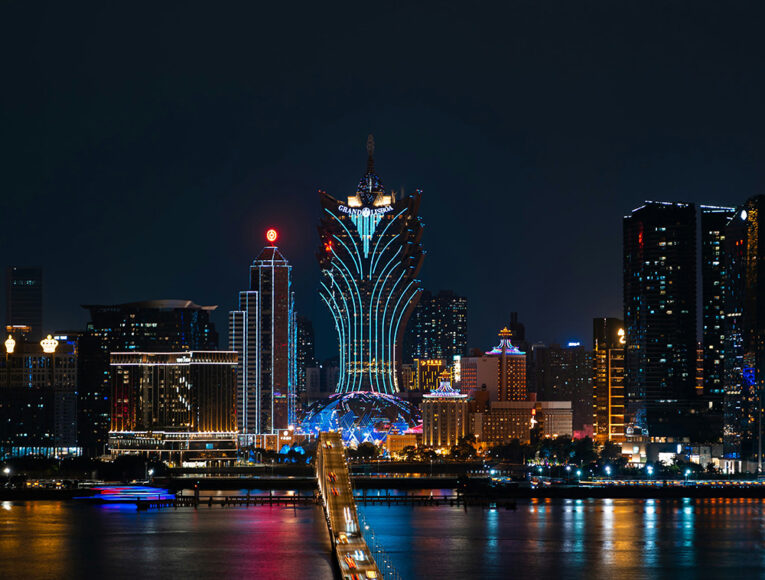
Manila’s Entertainment City has gone from a curiosity to a serious contender, glass towers and waterfront resorts strung along Manila Bay, all competing for the same crowd of shoppers, diners and high rollers. Macau’s Cotai Strip keeps growing outward, resort by resort, to the point where the skyline from five years ago barely matches what’s there now. Up in the hills of Malaysia, Resorts World Genting does something completely different, a casino built into cool mountain air with its own theme park bolted on, popular with families who’d never set foot on a gaming floor back home. Seoul’s Paradise Walkerhill is smaller and sharper again, tucked into an upscale district above the Han River, built for people who want the experience without fighting a crowd for a blackjack seat.
Anyone in the US pricing out that trip before booking anything might want to try something cheaper first. Most states still don’t allow real-money online casino play, but social casino sites let players try the same slot and table game formats found on these Asian resort floors without the flight or the real-money stakes. It won’t replicate standing under that fountain in Manila, but it’s a decent way to find out whether the games themselves are actually your thing before spending real money on plane tickets.
Singapore, Cambodia, Vietnam and Sri Lanka are all in the mix now too, and none of them are just copying Macau’s homework. Cambodia has kept a rougher, frontier energy that Macau lost years ago. Vietnam is still early but moving fast. Sri Lanka is going smaller and more boutique, chasing a different kind of traveler altogether. A loop through three or four of these countries doesn’t feel repetitive the way hopping between five Vegas resorts sometimes does, because each one is solving a different problem.
None of this is finished either. Bill Miller, president and CEO of the American Gaming Association, laid out the pipeline at a recent industry event in Asia. Wynn Resorts wants Ras Al Khaimah open by 2027. MGM is building in Osaka, targeting 2030. Marina Bay Sands is mid-expansion in Singapore, also aiming for 2030. Galaxy Entertainment is growing in Macau, and there’s a new project underway in Van Don, Vietnam. Five more stops are being built into a map that’s already fairly full.
Miller’s other point is the one that actually changes how a trip should be planned: the casino floor isn’t the draw it used to be on its own. Macau hosting a UFC card and NBA games this autumn wasn’t an accident, it’s the same shift that turned Las Vegas from a gambling town into a full destination decades ago. A trip to Macau or Manila now might mean a concert one night, a spa day the next, and only a couple of hours actually spent at the tables.
Manila, Macau, the Genting Highlands, or a longer loop through the region, take your pick. Anyone who’s already spent time exploring Macau and the wider region knows the skyline rarely looks the same on the second visit, and there’s no sign of that slowing down.