
Contents
Updated transport information — November 2026. It is still possible to travel independently from Galle to Ella by public bus, usually using Matara as the south-coast interchange. The route through Wellawaya remains a useful option, but individual bus services and connections can change. The practical notes below are based on published bus-route information, not a personal journey made in 2026.
How to Travel from Galle to Ella by Bus
1. Galle to Matara: Start at Galle bus station or board an eastbound coastal bus towards Matara; our separate Galle to Matara transport story describes this coastal leg. Buses travel via Unawatuna, Weligama and Mirissa. The Southern Province transport authority lists the Galle–Matara route 350 at approximately 44 km, with an indicative journey time of 100 minutes; actual journeys can vary. See the official route 350 fare-stage information.
2. Matara to the hill country: At Matara bus station, ask for a service going towards Ella, Bandarawela or Badulla, or a bus to Wellawaya for a further connection. Published inter-provincial route lists include buses travelling between Matara and Wellawaya on routes such as 35-3, and Galle–Nuwara Eliya route 31-1 via Matara and Wellawaya. Ask the conductor whether that specific service actually reaches Ella before boarding; not every bus on these routes does.
3. Wellawaya to Ella, if needed: If your bus ends at Wellawaya or does not stop in Ella, continue by a local uphill bus or arrange a tuk-tuk. This is the mountainous stretch towards Ella and Ravana Falls. Confirm the connection locally, especially if arriving late in the day.
Bus Timetables, Fares and Planning Tips
Plan on a long travel day and leave early rather than relying on a tightly timed connection. For published inter-provincial departures, check the National Transport Commission timetable and the Matara–Wellawaya route listings. These are planning references, not live confirmation that a particular bus is running. The Matara–Wellawaya route listing currently displays services such as route 35-3, often allowing roughly four hours for that leg, but its source timetables may be undated or older. Treat individual times as indicative and confirm departures at Matara bus station before committing to a connection.
The Southern Province transport authority lists a Galle–Matara bus fare of LKR 223 under its fare revision dated 6 July 2026. The Sri Lanka Transport Board fare notices provide another reference for the latest national fare revisions. Fares for the longer hill-country legs depend on your service and destination, so check the current price with the conductor. Bring small cash notes, allow time for luggage and transfers, and do not rely on the 2012 departure times below.
Our Original 2012 Galle to Ella Bus Journey
The following sections preserve our original journey, including the Matara bus station, crowded local buses and our tuk-tuk ride from Wellawaya to Ella. For the next stage of the trip, read our Ella to Kandy train journey. Any journey times, fares and frequencies mentioned from this point are historical.
Travel archive — 2012. This is the story of our bus journey from Galle to Ella via Matara and Wellawaya. The services, routes, prices and schedules were recorded during our trip and should not be treated as current transport instructions.
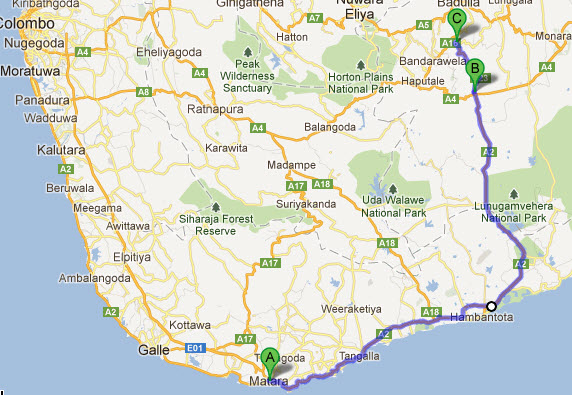
Matara to Wellawaya: Our 2012 Bus Connection
- Local buses leave Matara bus station every 30 mins throughout the day. The bus you are looking for is Matara to Bandarawela.
- Get off at Wellawaya or Bandarawela (if you miss Wellawaya).
- Hire a tuk-tuk to Ella (30 mins).
Matara To Ella by Bus: Our Journey
We were the only foreign folk at the sweltering Matara bus station. After muddling through conversations with locals we find the closest destination for Ella to be Wellawaya. Having time to spare before the bus departure we venture to surrounding markets in search of snacks for our 4-hour bus journey. We then board the bus with our egg-filled curry puffs and a bag of grapes. Some local hard sell from on-board hawkers topped up our snack supply with peanuts and mandarin oranges.


Local Buses in Sri Lanka
As expected local buses have no air-conditioning which concerned me a little having brought sweet, old mum along for the journey (I’ve brought her on worse). They are also slightly cramped so we paid more 200RP ($1.50) for extra seats. We could then relax in our seats like arrogant tourists and watch locals squeeze shoulder to shoulder in the walkway.
We had fled the south coast to feel safe. However, we were now more terrified than ever. The erratic driving of Sri Lanka was not new to us. Buses however are on a whole new level of crazy. These were the hair-raising local buses we remembered from our trip. We held tight to our seats as the hefty bus took off through a narrow coastline, accelerating into corners horn held tight. With complete contempt for stopping distances, small cars and auto-rickshaws were forced to scramble for their lives at nearby roadsides. Our nerves weren’t calmed by the high-tempo Hindi techno music which vibrated from the speakers above. In Sri Lanka, the bus is king of the road, at least until it meets an oncoming lorry.


From the Coast to Wellawaya
We followed the coastline for almost an hour before directing North at Hambantota. The route inland took us past rice fields and national parks stopping occasionally to offload at small villages and giving us a chance to stretch our legs and pick up choc ices and corn puffs. After 4-hours ahead we arrive in Wellawaya.
This stretch is where the journey really changes. After following Sri Lanka’s southern coastline towards Hambantota, the road turns inland across the lower, drier plains, passing small settlements around Lunugamvehera and Thanamalwila before reaching Wellawaya. Much of this route follows the A2, which connects the south coast with the inland road network. It is a different side of Sri Lanka from the beaches around Galle and Mirissa: roadside villages, farmland and long stretches of countryside rather than tourist towns.
Wellawaya is the turning point for the hill country. From here the A23 climbs towards Ella, trading the lower plains for steeper roads, cooler air and the dramatic approach past Ravana Falls. That is what makes this part of the trip memorable to me: in one journey we went from the tropical south coast towards Sri Lanka’s tea-growing mountains. The Ella development plan also maps the A23 and Ravana Falls along this route.


Wellawaya to Ella by Tuk-Tuk (2012)
We easily find tuk-tuks and within minutes we are rattling up the mountainside in search of Ella. We are greeted by heavy rains and are forced to battle between the tuk-tuks and the down-flows of water from the hills above. We rise up to the clouds, above the clouds, 1000m and still climbing. Passed the Ravana waterfall and arrive in Ella. Here for Full South Sri Lanka Tour.


very interesting!can You give me some advises,we are going to have a trip from Ella to Galle,by february month
Hi Roman. I think there is now a direct bus between Ella and Galle. Alternatively you can do similar to the above in return (year round). Ella have cheap Rickshaw drivers so have them drop you to the main road then get the bus to Matara and onwards. Only disadvantage of this, the bus may already be half full / squashed.Best of luck 🙂
Hi Allan, I know the post is quite old by now but I hope it’s not too late to ask for your advice. We are landing in Colombo on August 1st, at 5am. I thought about a quick walk in Colombo and then heading south to Galle. The morning after we’d like to go to Ella. Is the bus the best option? how early do busses leave?
Thanks for your help
Antonio