
Contents
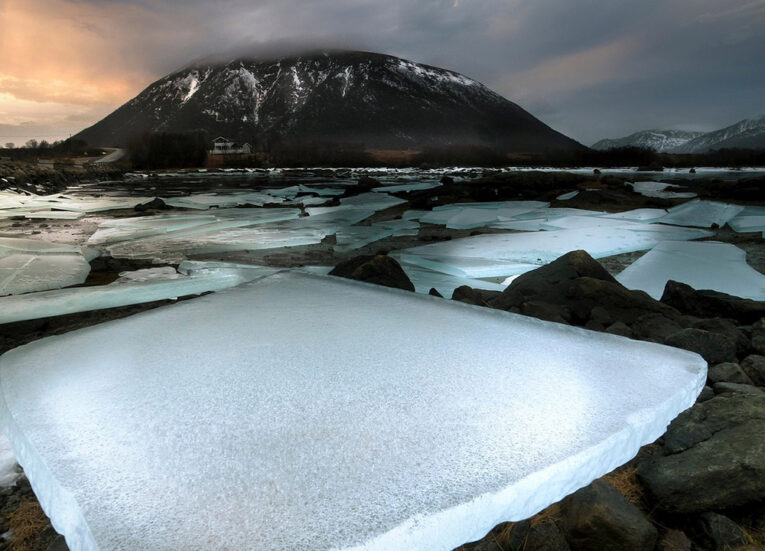
There’s a certain expectation that comes with wildlife travel.
For many, it begins in Africa — open landscapes, visible game, a sense that nature reveals itself quite readily if you’re in the right place at the right time. It’s immediate. Impressive. Sometimes even predictable, in the best possible way.
Alaska feels different.
Less obvious, perhaps. Less immediate. It doesn’t offer itself quite so easily. And yet, for travellers seeking something more considered — something that unfolds rather than performs — it holds a quiet appeal.
Those exploring luxury wildlife holidays through specialists such as Wildfoot Travel often find Alaska sits slightly apart. Not because it competes with other destinations, but because it offers a different kind of experience altogether.
One that rewards patience. And attention.
The Scale Of Wilderness: Why Alaska Feels Untouched
It’s difficult to overstate the sense of space in Alaska.
Not just in terms of geography, but in how that space is experienced. Landscapes stretch without interruption. Forests run deep. Coastlines feel distant, even when you’re standing right beside them.
There’s infrastructure, of course — but it rarely dominates. In many regions, it recedes just enough to let the environment take over.
And that changes your perspective.
You’re not observing wilderness from a distance. You’re moving through it. Sometimes slowly, sometimes almost imperceptibly. The experience isn’t framed or contained. It’s expansive, and at times, slightly overwhelming in its scale.
Which, I think, is part of the appeal.
A Rare Combination: Bears, Whales And Glaciers In One Journey
What makes Alaska particularly compelling is the range of experiences it brings together.
In a relatively short journey, you might move from watching brown bears along a remote shoreline to observing whales surfacing in open water, then on to vast glacial landscapes that feel almost otherworldly.
These aren’t separate trips. They’re part of the same rhythm.
Kodiak Island offers close encounters with one of the largest populations of brown bears in the world. The Inside Passage introduces a different environment entirely — calmer waters, rich marine life, forested coastlines. And Glacier Bay, with its immense ice formations, shifts the focus again.
The transitions feel natural, not forced.
And that continuity — moving through ecosystems rather than between disconnected highlights — is what gives Alaska its depth.
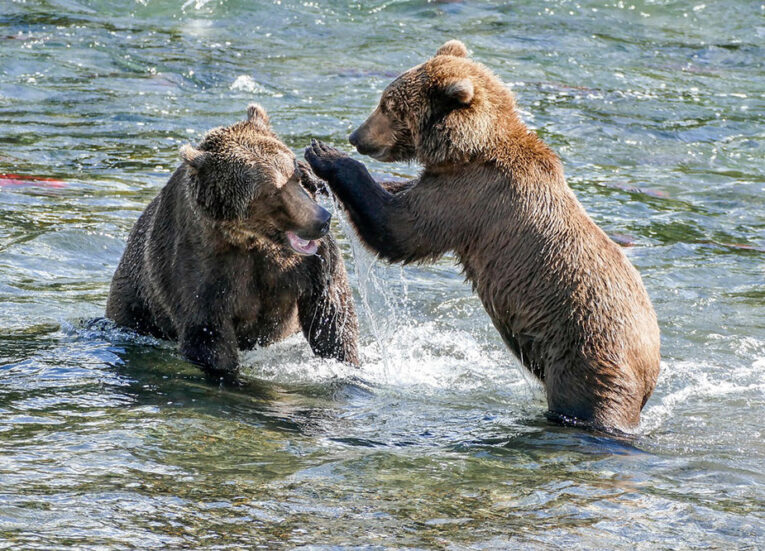
Kodiak Island: Close Encounters With Brown Bears
Kodiak Island carries a certain weight to it.
Not in a dramatic sense, but in how quietly intense the experience can be. The bears here are not staged or distant. They exist within their environment, moving with a rhythm that feels entirely their own.
Observing them requires patience.
You wait. You watch. And gradually, behaviour reveals itself — feeding, interacting, simply existing. It’s less about a single moment and more about understanding what you’re seeing.
Encounters tend to feel intimate, even in open landscapes.
Smaller groups help with that. So does the sense that you’re slightly removed from anything resembling crowds. It doesn’t feel like an attraction. It feels… considered.
The Inside Passage: Wildlife Along The Water
The Inside Passage introduces a softer pace.
Water becomes the primary route, and movement slows accordingly. You begin to notice details — the way the coastline shifts, how light changes across the surface, the quiet presence of wildlife that appears and disappears without announcement.
Whales, of course, are a highlight.
But it’s not always about dramatic breaches or perfectly timed sightings. Sometimes it’s a distant movement, a subtle exhale, a brief moment that requires attention to fully appreciate.
Sea lions gather along rocky outcrops. Bald eagles rest in tall trees. The environment feels layered, not overwhelming.
And perhaps that’s what stands out — the sense that nothing is competing for attention. It simply exists, waiting to be noticed.
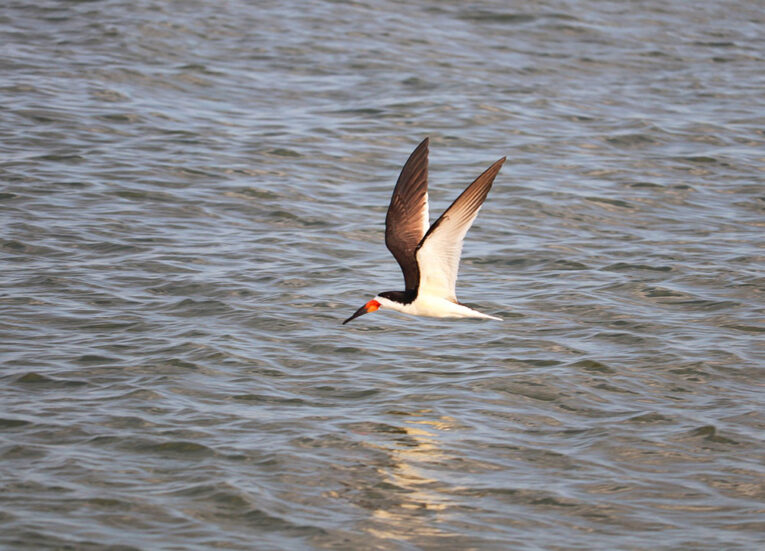
Glacier Bay: Where Ice Shapes The Experience
Glacier Bay shifts the experience again.
Here, the landscape feels almost static at first glance — vast ice formations, cold air, an atmosphere that carries a certain stillness. But spend time here, and you begin to realise how much is happening.
Glaciers move, slowly but constantly. Ice calves into the water with a sound that echoes further than expected. The environment feels alive, though not in the way people often imagine.
Wildlife adapts to this setting — seals resting on floating ice, seabirds circling above, subtle signs of life within what initially appears stark.
It’s not a place that overwhelms with activity.
Instead, it draws you in through quiet observation.
Beyond The Highlights: Alaska’s Less Obvious Wildlife Moments
It’s easy to focus on the larger encounters — bears, whales, glaciers. And they are, undeniably, significant.
But Alaska often reveals itself in smaller ways.
An otter drifting through kelp, almost effortlessly.
A bald eagle perched without movement, watching.
The quiet presence of wildlife that doesn’t demand attention, but rewards it.
These moments don’t always make it into itineraries.
Yet they tend to linger.
Perhaps because they feel unforced. Or because they arrive without expectation.
The Role Of Expedition-Style Travel
The way you move through Alaska matters.
Large, structured journeys can offer access, certainly. But they don’t always allow for flexibility — and flexibility is important in a place like this.
Smaller, expedition-style travel changes the dynamic.
Routes adjust. Time is allowed for observation. Guides — often naturalists with deep knowledge of the region — add context that shifts what you’re seeing from a moment into an experience.
It feels less like following a plan, and more like responding to the environment.
And that distinction, subtle as it is, makes a difference.
Why Alaska Redefines “Luxury” In Wildlife Travel
Luxury, in this context, doesn’t present itself in obvious ways.
It’s not about scale or excess. Not about polished surfaces or over-designed experiences.
Instead, it’s quieter.
It’s the ability to access remote areas without friction. To experience wildlife without distraction. To move comfortably, but without losing connection to the environment around you.
There’s a kind of ease to it.
And perhaps that’s what defines it — not what’s added, but what’s removed.
Timing Matters: How Seasons Shape The Experience
Alaska is shaped by its seasons in a way that feels more pronounced than many other destinations.
Summer brings long daylight hours, increased wildlife activity, and conditions that allow for exploration across regions. It’s when most journeys take place — and for good reason.
But even within that window, timing matters.
Migration patterns shift. Wildlife behaviour changes. Light itself feels different as the season progresses.
Planning around these nuances doesn’t guarantee specific sightings.
But it does shape the overall experience.
What Makes Alaska Stay With You
It’s not always easy to explain.
There may not be a single defining moment — no one experience that stands above everything else. Instead, it’s a collection of impressions.
The scale of the landscape.
The quiet between encounters.
The feeling of being somewhere that doesn’t adapt itself for visitors.
It lingers.
Not loudly, but consistently.
A Different Kind Of Wildlife Journey
Alaska doesn’t try to compete with other wildlife destinations.
It doesn’t need to.
What it offers is something slightly more understated. Less immediate, perhaps. But in many ways, more lasting.
For those willing to engage with it — to move a little slower, to observe a little more carefully — it becomes something more than a destination.
Not just a place where wildlife is seen.
But a place where it’s understood, even if only briefly.