
Contents
The United States has always had a complicated love affair with gambling. Some states embrace it with open arms, others ban it entirely, and then there are those grey areas in between where a weekend getaway can turn into a legal labyrinth.
Las Vegas and Atlantic City. They’re not just about the tables or the slots—they’re about the food you eat at two in the morning, the way your shoes stick slightly to the boardwalk planks, or how the desert air feels sharp and dry when you step outside a glittering casino into the night.
Jackpot Sounds casino win replays serve as a sort of echo of those moments—the triumphant noise you hear when someone, somewhere, has hit big. It’s like a Pavlovian bell for gamblers, the audio wallpaper of these trips. You don’t just hear them; you carry them home in your head along with the smell of cigarette smoke mixed with perfume and the memory of a buffet line that felt endless.
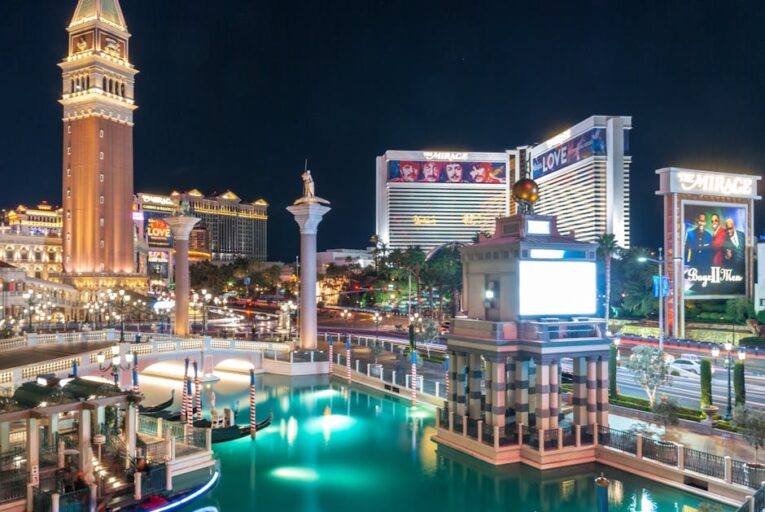
Vegas: the desert city that never learned the word “enough”
Vegas is still the heavyweight champion. More than 40 million visitors pass through every year, and if you spend a few days there you’ll understand why people return even if they’ve never won a dime. Yes, there’s the Strip, with all its neon and choreographed fountains, but Vegas has layers.
You can go from ordering a $1.99 shrimp cocktail at a casino lounge that hasn’t updated its wallpaper since the Carter administration, to sitting down three hours later at Joël Robuchon’s place where dinner for two costs more than your flight.
Both are equally Vegas. If you ask, the real gamble in this city isn’t at the blackjack table—it’s deciding where to eat.
And then there’s everything else: Cirque du Soleil, the Neon Museum with its half-lit relics of old signs, even desert hiking if you’re willing to drive twenty minutes away. People forget you can go from slot machines to red sandstone cliffs in less than an hour.
Atlantic City: casinos with a side of salt air
Atlantic City feels different. It doesn’t try to outshine Vegas—it couldn’t. What it does instead is lean into its Boardwalk history and its scrappy, blue-collar charm. Resorts International opened in 1978 and set off the casino wave here, but what always strikes one about AC is that you can play poker all night and then eat a greasy slice of pizza at 6 a.m. while watching the sunrise over the Atlantic. Try doing that in Nevada.
Food here has a way of grounding you. White House Subs makes hoagies so stuffed with meat and cheese you need two hands just to lift them.
Dock’s Oyster House, running since 1897, is where you go when you want to wash the sting of a losing streak down with a plate of fresh oysters and a pint of local beer. And yes, saltwater taffy is still everywhere, in every color imaginable, as if the town refuses to let go of its boardwalk carnival roots.
It’s rough around the edges, sure. The skyline is a little faded compared to its Vegas cousin. But there’s something honest about Atlantic City—you’re never far from the ocean, and the seagulls don’t care if you just won or lost $500.
Smaller stops, big flavors
Of course, it’s not all about the big two. One might have driven down to Tunica, Mississippi, where the casinos sit along the Mississippi River and the buffets pile on ribs, fried catfish, and cornbread that tastes like someone’s grandmother made it.
Or Connecticut, where Mohegan Sun and Foxwoods rise like palaces out of the woods.
You can spend the day playing baccarat, then eat a lobster roll in Mystic by the water, and the contrast feels very New England: old fishing towns meeting modern mega-casinos.

The taste of travel
The truth is, casinos on their own would get boring. You can spin a slot machine anywhere these days, even on your phone. What makes these destinations matter is the mix—the travel, the food, the strange little details you only notice when you’re there. The sound of chips clinking at 3 a.m.
The feeling of eating a cheesesteak on the boardwalk while your last hand still plays through your mind. The way the Vegas air feels hot but not sweaty, like someone left the oven door open.
Casino tourism in the U.S. is about gambling, yes, but it’s also about flavor. It’s about the steak dinner that cushions a big loss or the celebratory buffet after a win. It’s about walking into a place knowing you’ll spend more than you should, but also knowing you’ll come home with stories—some about cards and dice, others about clam chowder or neon signs. And that, honestly, is why people keep coming back.
Drops in casino, tourism numbers raise worries for Las Vegas