
Hi, I’m Allan, the grumbly-looking fella, eating all sorts of weirdness while wearing traditional Japanese clobber below. That’s also me filling my face with unusual burgers in Xi’an China, and banging some shots of potent moonshine palm toddy in random parts of remote Myanmar.
Yet, despite my somewhat miserable demeanour, this is me at my happiest. Eating and drinking weird stuff, in weird places, surrounded by weirdness. And I have been doing very similar for the past 5 years or so, living off street food in Thailand, farting about in Asia, and just skiving really. It’s been great.
Anyway, while I would love to share everything that has been forced through my piehole in the past 5 years, I don’t think I have time to. So instead I will just share my Top 60 Foods of Asia. The Must-Eats that every person should try when travelling in these parts of the world. And if you missed any on past visits then you have to go back. Just don’t forget your esim for Asia.
Note, I know this is a longer post than usual, so I’ve added a fancy-looking eBook over there >>> on the right-hand sidebar >>>. And this will also give access to all my free eBooks and guides which, of course, are all awesome.


01. CHILLI CRAB in Singapore
Stir-fried crab in a tomato-based, sweet, savoury and slightly hot chilli sauce. Break into its claws with crab crackers and suck at the flesh. The popular crab choice in Singapore is the mud crab but expect all sorts of shapes and sizes. While having lost its lustre of late the chilli Crab will always be a must-eat when in Singapore.

02. KHANTOKE DINNER in Thailand
A traditional Northern Thai feast showcasing many of the region’s Lanna food favourites. Bites include chilli dips, spicy sausage, Northern-style curries, and the staple rice. “Khantoke” refers to the haunch height, round tables in which diners feast around and dinners generally come with traditional dance, performances, and local liquor.

03. CURRY FEAST in Sri Lanka
Laced with chunks of cinnamon, curry leaves and other local spices, a curry feast on the Island of Spice is not to be missed. In Sri Lanka, curries rarely come served alone and are often matched with sides (condiments) of bean curry, cabbage curry, dhal curry… all sorts of curry. Eat with rice, spicy sambals, and popadoms.

04. MOMOS in the Himalayas
With obvious Chinese influences, these Himalayan meat and/or veg dumplings make a great fast food snack to-go when eating in the Himalayas. While best known for Nepali origins momos are now common on all sides of Himalayan borders through Tibet, Bhutan, and India. Momos are served with an optional hot chilli sauce, dark soy, and a side of soup.

05. CANDIED HAWS in China
Like mini candy apples with a sharp sour bite. Candied haws known locally as Bing Tanghulu are a popular Chinese street food snack made from local Chinese Hawthorns skewered, dipped in sugar syrup, and left to harden. While haws are the most common sweet, there are variations with deseeded and stuffed haws or varying candied fruits.

06. KIMCHI in Korea
Accompanying almost every Korean meal these spicy, fermented vegetables are like the ketchup of Korea. While the most common Kimchi is of pickled napa cabbage (baechu kimchi) there is in fact seemingly endless variations of vegetables and seasonings. To make a meal of it try Kimchi fried rice (Kimchi Bokumbap) or a proper Korean Barbecue.

07. SATAY (SATE) in Indonesia
Quintessential barbecue food with tender meat pieces, marinated, skewered, and grilled over flaming hot charcoals. Satay comes served with a fiery, hot peanut sauce and while replicated elsewhere in Asia regional interpretations can be less spicy and more sweet. Satay is no doubt found best at its origins in Java Indonesia.

08. ROTI PRATA in Singapore
Better known for its origins in India, this humble pan-fried flatbread followed old colonial trade routes to Singapore, my new favourite city to share this simple food staple. Roti Prata is found best at Indian Muslim shophouse restaurants in Singapore, try Little India or Geylang. Best served with curry sides and Tiger Beer.

09. AIS KACANG in Malaysia
Shaved ice is common with Asian desserts, but for me, it is best found in Malaysia with AIS Kacang, a mix of shaved ice and variations of fruit, beans, icecreams and syrups. Ingredients do vary but the traditional mix comes with red beans, sweet corn, grass jelly and cubes of agar jelly. Also popular in Singapore and Brunei.

10. NOODLE SOUPS in China
I find an exciting new world of noodle soups in China with meaty toppings and fascinating local flavours. Some of the more memorable bowls include toppings of sausage or even chicken drumsticks and flavourings of pickled long-bean and mouth-numbing Sichuan peppercorns. Variations can be endless.

11. SHAN NOODLES in Myanmar
This popular street food in Myanmar and tea house snack is served as thin rice noodles, topped with spiced meat, and more than not, with soup broth on the side. Mix together and slurp it up. Popular sides include bean sprouts, deep-fried pork skins, and triangles of tofu fritters (napyan gyaw). Perfected with chilli and lime.

12. BEEF RENDANG in Indonesia
Beef stewed in coconut milk with a spice paste mix of ginger, turmeric, and fiery chillies. With slow cooking times and impatient waits I find beef dishes to be out of favour in Asia. Beef Rendang makes up for this and following hours of perfecting, the resulting Rendang is a dry, rich, and caramelised beef masterpiece.

13. DIM SUM in Hong Kong
Bite-sized dumplings, steam cooked and served as either an appetizer or together as a feast. Dim Sum dumplings come with various flavours and fillings and are traditionally served in bamboo steaming baskets. In Hong Kong ‘Yum Cha’ is an eating experience hard to beat where Dim Sum joins local tea tasting.

14. SUSHI in Japan
Sushi is ‘cooked vinegared rice, topped with ingredients. Some of the popular ingredients in the bright and beautiful world of sushi include thin cuts of fresh fish, caviar and fish eggs and wraps of seaweed. If the delicate tastes of sushi fail to excite then dabs of soy sauce, wasabi or pickled ginger will liven it up.

15. FISH HEAD CURRY in Singapore
A uniquely Singaporean food reflecting both Indian and Chinese cultures of this food-obsessed city. A hot South-Indian style curry brought together with the Chinese obsession for red snapper fish head. The result is curry perfection. If the full curry is too filling, smaller offerings can be found at Singapore’s precooked hawker stalls.

16. BEERLAO in Laos
Often better known for logoed backpacker t-shirts this iconic Beer brand is one of the most sought-after beers in Southeast Asia and with 99% share of Laos’ beer market it can often be hard to see past. If bored of the regular Beerlao try the Beerlao Black or Gold alternatives. Perfect with sunsets and local Lao Food on the Mekong River.

17. NASI CAMPUR in Malaysia
Canteen-style curry buffets serving hot pre-cooked dishes and other sides. Grab a plate, pile on the rice and take your pick. Nasi Campur (mixed rice) canteens can offer 10s to 100s of curry options and work well as an introduction to eating in Malaysia. In North Malaysia, Nasi Kandar is a similar, more Indian-inspired alternative.

18. BULGOGI BBQ in Korea
Korean Barbecues are hands-on eating where diners cook their own meats over built-in charcoal grills at restaurant tables. Eat with a hot chilli dipping sauce (ssamjang) and share with Kimchis and other popular Korean side dishes (banchan). The big favourite at Korean barbecues is bulgogi, a rich marinated beef.

19. BUN CHA in Vietnam
Fatty grilled pork (Cha) served with rice noodles (Bun), fresh picks of herbs and a salty, sweet and slightly hot dipping sauce (nuoc cham). This popular Hanoian dish offers an unhealthy escape from the green and goodness of Vietnamese cuisine. It is also a ‘lunchtime’ food and is best found around midday.

20. EGG TARTS in Macau
The signature Macau egg tart comes with a crisp and flaky pastry, a caramelized sugar top, and a smooth, creamy egg custard centre. While many foods in Macau are Chinese-influenced the egg tart originates from the Portuguese Colonial era. To this date, it is the best known, and easiest to find ‘Macanese’ treat. Eat warm.

21. BEEF NOODLES in Taiwan
Slowly stewed beef, simmered in beef broth and served with Chinese noodles and happy additions of greens. This rich and hearty noodle dish is a hugely popular Taiwanese food common to Taiwan’s famous night markets and with its revered reputation in Taipei it has been celebrated annually with its own Festival (Taipei Beef Noodles Festival).

22. MANGO STICKY RICE in Thailand
The best known of Thai desserts and one to make up for the Kingdom’s lack of choice. While fresh mango alone is delicious enough; when matched with coconut sticky rice, drizzles of coconut syrup and sprinkles of toasted mung beans this sweet treat is unbeatable. Sweet, slightly salty and all-round delicious.

23. BREAKFAST CREPES in China
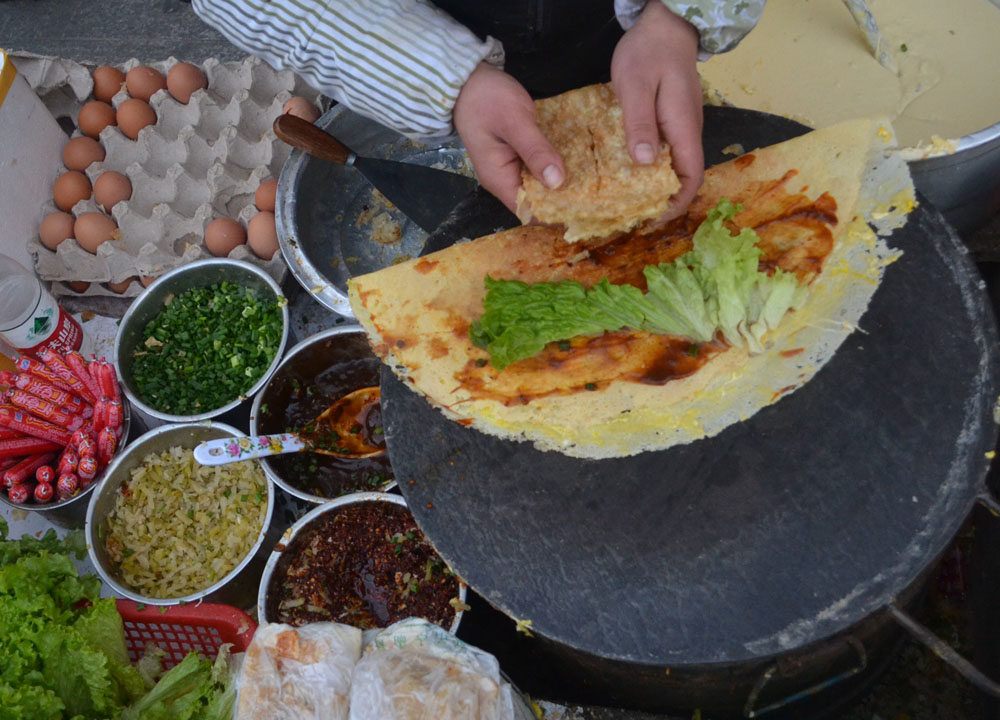
Chinese food isn’t all stir-fries and rice dishes and this is illustrated best through street food where flatbreads and grilled meats are more the staple. My favourite street snack has to be Jianbing a thin egg crepe with scatters of scallions, a smudge of rich chilli sauce, lettuce leaf filling and a crunchy centre of crisp fried dough.
24. BURYANI in Sri Lanka
While Biryani is common to much of South Asia in Sri Lanka it comes hotter, spicier and ultimately better. For those new to Biryani (known as Buryani in Sri Lanka) it is a layered rice dish which fuses an aromatic and flavoursome sauce of local spices. While Buryani can be a meal to itself it does match well with tandoori chicken.

25. MASSAMAN CURRY in Thailand
Green, Red, Yellow… should all bow to Massaman, the King of Curries. This revered Thai curry comes best slow-cooked with beef and potatoes and topped with pan-fried peanuts before serving. While uniquely Thai the Massaman does have a South Asian kick with occasional spices of cardamom, cinnamon, cloves and nutmeg.

26. DURIAN in Southeast Asia
In South East Asia the Durian is both feared and revered as the formidable ‘King of Fruits’. For those who brave past the alien-esque shell and pungent smell of the durian, expect a lifelong obsession for the sweet, creamy and perfect fruit inside. The Durian is a seasonal fruit with harvests best found between June and October.

27. BICOL EXPRESS in the Philippines
This fiery stewed pork dish is flavoured with garlic, chili, ginger and shrimp paste before simmering to perfection in coconut milk. As a sucker for coconut and chili kicks the Bicol Express is a personal favourite for Filipino Foods as few dishes come close on chilli heat. Bicol Express is rumoured to be even hotter at its origins of Bicol.

28. GULAB JAMUN in India
Gulab Jamun are spongy dough-like dumplings made from the deep frying of curdled milk solids and flavourings of cardamom and a rosewater sugar syrup. A favourite dessert throughout the South Asian subcontinent Gulab Jamun are sweet, sugary and undeniably delicious. Serve either hot or cold.

29. CURRY FEAST in Myanmar
Eating in Myanmar can be intimidating with a somewhat rough and ready reputation. A good start is no doubt at the local curry canteens where choice of meat comes with a mix of sides. Expect maybe a veg soup, a watercress salad, tomato curry and my personal favourite bean curry. Eat with rice, veg and fish paste (ngapi).

30. PHO in Vietnam
Pronounced ‘Fu’ as in ‘Furby’ Pho is an aromatic, broth-based noodle soup full of healthy herbs and local spice. It is also hard to miss in Vietnam being found all day, every day, everywhere. Note don’t let soup exploration end here, Vietnam must be the soup mecca of the world with seemingly endless soup bowls to slurp on.

31. BEIJING DUCK in China
Known globally as ‘Peking Duck’ the perfect oven roast duck comes served with thin crisp skin and moist tender meat. Eat wrapped in pancakes with the cool crunch of cucumber, a bite of scallions and a rich swab of hoisin sauce. It is fair to say ‘the best Beijing Duck can be found in Beijing’ and I find it hard to disagree.

32. SUMMER ROLLS in Vietnam
Fresh local herbs, vermicelli (rice) noodles, and choice of meat (fresh prawns please) all tightly wrapped in rice paper. Fresh spring rolls, or summer rolls, are easily my favourite snack option in Vietnam and come perfectly matched with a rich peanut sauce (Nuoc Leo). How something so green and healthy tastes this good is beyond me.

33. RAMEN NOODLES in Japan
Noodles are a staple in Japanese eating and for the best of them it is hard to look past Ramen. As with most noodle bowls Ramen come in three parts; the noodles, the broth and the meaty topping. The popular Ramen bowl would be with a thick pork bone soup (tonkotsu) and toppings of braised pork belly (chashumen). Oishii Oishii!

34. DUM ALOO in the Himalayan Region
Golden fried potatoes, sautéed onions cooked in a perfectly spiced tomato gravy. While often mistaken as a Nepali dish, the origins of Dum Aloo trace back to the Kashmiri region of India. Now it has been adopted by restaurants throughout the Himalayan ranges; Nepal, Tibet and even Bhutan. My favourite vegetarian dish.

35. FRUIT RUJAK in Indonesia
Rujak mixes the sweets and sours of regional fruits with the spicy and hot of a rich chilli and tamarind fused dressing. While fruits will vary through regions and seasons the common bites include water apple, pineapple and sour unripe mangoes. Rujak or Rojak is also common to Singapore and Malaysia.

36. SUCKLING PIG in Indonesia
In this world few things beat roast pig, and few roast pigs can compete with that of Bali, Indonesia. Cooked whole hog on a spit roast the resulting meat comes tender, and the skin thin and crisp. The dish can only be perfected by the quintessential spice mix. Suckling pig is a popular breakfast bite but can be found day round.

37. LAO BAGUETTES in Laos
Colonial French influences don’t come more obvious? While fillings are potentially limitless with this street food staple, the popular Lao baguette comes with pork liver pate, steamed pork (moo yor), shreds of carrot and radish and cuts of cucumber. Perfect with a squeeze of mayo and swab of fiery chilli sauce.

38. TAKOYAKI in Japan
Savoury octopus dough balls filled with tempura scraps and flavourings of spring onions and pickled ginger. Serve in a ‘boat’ and top with mayonnaise and a soy-like sauce (often compared to Worcester sauce). While popular as a side dish on restaurant menus Takoyaki are found best piping hot from street food, still gooey. They are one of the most common street food snacks in Japan and originate from Osaka.

39. THALI PLATES in India
Providing an easy introduction to Indian food is the Thali plate a set meal of pretty much anything. Each Thali comes served with various dishes which often include flatbreads, grilled meats, flavoured rices, and selections of meat and veg curries. Eat with sides of chutneys, pickles, spiced dips, and popadoms.

40. SICHUAN HOT POT in China
With extreme heat of chillies and the numb of Sichuan peppercorns the Hot Pot experience hits like a punch in the face.. and it’s a punch you’ll keep coming back for. Hot Pots are hands-on eating where diners cook their own meats in a fiery mala soup base in built-in hot pots at restaurant tables. Eat as a soup and share with various condiments (here we track the hot pot to its origins in Chongqing China).

41. AMOK in Cambodia
While various meats can be used in preparation the fish amok (amok trey) is no doubt the local favourite in Cambodia. Steamed in banana leaves fresh fish is fused with thick coconut cream and a fiery khmer curry paste to create a simple snack with a somewhat mousselike texture. Best described as “steamed curry fish”.

42. CHICKEN RICE in Singapore
One of Singapore’s most common and sought after hawker foods is Hainanese Chicken rice where a whole chicken is cooked by boiling and served over rice cooked in chicken stock. Chicken perfection is said to have oily skin, tender meat and an all-important gelatin layer between. Add optional drizzles of dark soy or chilli.

43. CURRY in Japan
This unlikely Japanese staple can be best found in Katsu Curry served with a pork cutlet and garnishings of red pickled daikon. But curry in no means ends here as I find many weird and wonderful combinations on offer. My favourite to date (pictured) served over a beef burger with a crisp mozzarrela topping.

44. TANDOORI CHICKEN in India
Chicken pieces are first marinated in spices and left overnight to soak in the flavour. The next day the chicken is skewered and cooked wihin a giant earthenware oven. On goes the lid and the chicken is smoked to perfection. Tender on the inside, crisp and flavoursome on the out. The tandoor oven was no doubt a blessing from Vishnu.

45. KHAO SOI CURRY in Thailand
If Massaman is the King of Curries then Khao Soi is King of the North. Presiding in Northern Thailand Khao Soi is a coconut based curry, well spiced and comes served over soft egg noodles, topped with crisp egg noodles. Flavour with lime, onion, chilli and pickled cabbage. While relatively mild in heat it is no doubt full in flavour.

46. LAAB MOO SALAD in Laos
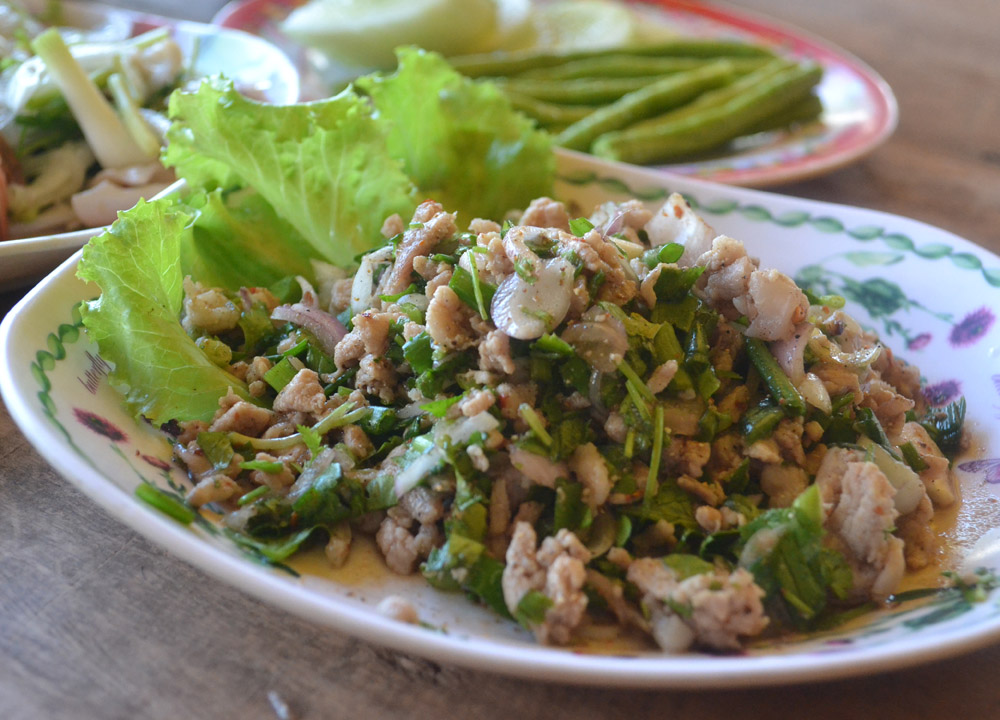
A fiery minced pork salad stir-fried with shallots, coriander and mint leaves and plenty of chilli heat. While famous in Thailand’s Northeast Region (Isaan Food) this much-loved salad originated in Laos where it comes well matched with the Lao staple of sticky rice. A chewy alternative is ‘Nam Tok Moo’ with grilled pieces of pork.
47. CURRY MEE in Malaysia
This spicy, coconut-based curry soup comes served over egg noodles, with fried tofu, crunchy additions of beansprouts and occasional cubes of congealed pigs blood. Curry Mee is my preferred eggy alternative to the better known ‘Curry Laksa’, the difference being ‘Mee’ are egg noodles while laksa are thick rice noodles.

48. ADOBO in the Phillippines
Adobo is the unofficial National Dish of the Philippines and with origins in the Spanish colonial era Adobo translates to ‘Marinade’ from Spanish. This marinated meat dish comes with flavourings of local palm vinegar (suka), garlic, black pepper, and soy sauce. Comes best slow-cooked with chicken or pork or both (CPA).

49. SAKE in Japan
Sake is in fact a generic term that means no more than ‘alcohol’ in Japan. The Sake many of us know is in fact ‘Nihonshu’ a Japanese rice wine with standard strength of around 14% or so. If you want a tipple with more of a kick try Shochu (25%-ish). While Sake comes best chilled it is often served heated in Japan’s colder months.

50. LOCAL LIQUORS everywhere
There are few quicker routes to local immersion than boozing with locals, and the harder the liquor, the quicker you get there. Many moonshine liquors are made through the fermentation and distillation of local staples and common examples include rice husks for rice whiskys or palm sap for palm wines. Bottoms up.

51. AMBUYAT in Brunei
Brunei’s national dish, Ambuyat, is a unique culinary experience. It’s made from the interior of the sago palm tree and is often served with a variety of dipping sauces. The texture is unlike anything you’ve tasted before, somewhere between jelly and glue, but its neutral taste makes it a perfect canvas for the flavours of the accompanying dips. It’s a must-try for anyone exploring the wonders of Asian cuisine.
52. HILSA (ILISH) CURRY in Bangladesh
Bangladesh’s national dish, Hilsa (Ilish) Curry, is a prized delicacy in Bangladeshi cuisine. It features Hilsa fish, a type of herring, cooked in a rich and flavorful curry made with a variety of spices and flavors. This dish holds a special place in the hearts of many Bangladeshis and is a significant part of their culinary culture.
53. MANSAF in Jordan
This traditional Arabic delicacy features tender lamb and rice, cooked in a rich yogurt sauce and garnished with pine nuts and herbs. It offers a unique culinary experience in the heart of the Middle East, showcasing the region’s culinary traditions.
54. BUUZ in Mongolia
Mongolia’s national dish, Buuz, consists of steamed dumplings filled with a succulent mixture of meat and spices. It’s the perfect comfort food and a delightful representation of Mongolian cuisine.
55. GRILLED HALLOUMI in Lebanon
Lebanon’s Grilled Halloumi is a cheese lover’s dream come true. Halloumi cheese is grilled to perfection, resulting in a delightful mix of crispy exterior and soft, melt-in-your-mouth interior. It perfectly represents the flavors of Lebanese cuisine.
56. KEBAP in Turkey
Turkey’s national dish, Kebap, offers a satisfying blend of succulent meat, fragrant spices, and fluffy bread. Whether you go for Adana Kebap or doner you’re in for a taste of authentic Turkish cuisine.
57. BIRYANI in Pakistan
Biryani in Pakistan is a fragrant and flavorful rice dish that combines tender meat, aromatic spices, and perfectly cooked rice. It’s a dish that showcases the rich food culture of Pakistan and is famous around the world.
58. CHELO KEBAB in Iran
Iran’s Chelo Kebab is a Persian delight that features saffron-infused rice served with grilled meat, creating a delectable contrast of textures and flavors. It’s a staple of Iranian cuisine and a wonderful addition to your Asian food exploration.
59. KABSA in Saudi Arabia
Saudi Arabia’s national dish, Kabsa, is a traditional feast that combines fragrant rice with tender meat, perfectly spiced and cooked to perfection. It’s a delightful representation of the flavors and culinary traditions of Saudi Arabia.
60. Al Harees in Saudi Arabia
Al Harees is a traditional Emirati dish typically enjoyed during the holy month of Ramadan and other special occasions. It’s made by slow-cooking a mixture of wheat and meat (usually chicken or lamb) in a clay pot for several hours until the ingredients blend together into a creamy, porridge-like consistency. The slow cooking process results in a dish with a smooth and comforting texture, and it’s often sweetened with sugar, ghee (clarified butter), and a hint of cardamom.
Free eBook: 60 Top Foods of Asia
For this post in eBook format, and for access to all our other eBooks, sign-up below. All awesome and no junk.

Frequently Asked Questions (FAQs)
What is the history of Asian cuisine?
Asian cuisine has a rich and diverse history dating back thousands of years. It has been shaped by various cultural influences, trade routes, and regional ingredients. Asian culinary traditions reflect the heritage and customs of each country, making it a fascinating journey through time.
What makes Asian dishes so popular worldwide?
Asian dishes are renowned for their bold flavors, unique combinations of spices and a wide variety of ingredients. The diversity and complexity of Asian culinary delights cater to a broad spectrum of tastes. The popularity of Asian food can be attributed to its ability to offer both familiar and exotic experiences, making it a global favorite.
Are there regional specialties in Asian gastronomy?
Absolutely, Asian gastronomy is known for its regional specialties. Each country and even different regions within a country have their unique dishes and cooking traditions. From the spicy curries of South Asia to the delicate sushi of Japan, regional Asian specialties are a testament to the culinary diversity found on the continent.
How do Asian flavors differ from other cuisines?
Asian flavors are distinctive due to the use of aromatic herbs, spices, and seasonings such as ginger, garlic, lemongrass, and soy sauce. The balance of sweet, salty, sour, and umami elements in Asian dishes creates a harmonious and memorable taste experience. Exploring Asian flavors is a journey into a world of palate-pleasing sensations.
What are the cooking traditions that define Asian cuisine?
Asian cooking traditions are deeply rooted in history and culture. They often emphasize techniques like stir-frying, steaming, and using woks. The use of fresh and locally sourced ingredients is a common practice, highlighting the importance of seasonality. These traditions contribute to the unique and diverse culinary experience found throughout Asia.
Further resources:
I think I haven’t tasted half of these beautifully photographed wonders of Asian foodlandia, but the curries and noodles and chickens surely are my top favorites.. and that fancy dessert in Malaysia with ice cream on the top makes me drool and come back and hunt for it! 😛
I love your list!
Hard to beat a good curry. Tempted to make this list 100. Just too much to share 🙂
What the fuck?? Why indonesia claim malaysian food?? Rojak buah..satay rendang..is malaysian food..who the hell is make this blog??
Calm yourself Bryan. There’s a lot of crossover in Malay/indonesian cuisines. Although wiki shows rendang as: Origins: Indonesia, West Sumatra and Satay as Origin: Indonesia, then Rojak as Origins: Indonesia, Malaysia, Singapore 😀 Kudos with the nationalism tho. Patriotism should always come before being agressively wrong. Actually I think I remember Malaysia claiming Fish Head Curry at one point as well.
it says Rujak not Rojak, rujak has alot of variety (serut, cingur, buah, lotis and many others).
then Rendang see also semur daging, dendeng sapi, rendang, empal gepuk, thats all the chain and variety of indonesian style beef cooking ( from wet stew till dried jerk). Dedicated to Briyan. Who is claiming?
I really think Malaysia has more good food than Singapore … 🙂 Cheers!!!!
Awesome blog.. Good and thanks for sharing with us.. mind blowing post… superb
i didnt know half those foods
I only knew 3 of these, for me the only problem is that I couldn’t find teriyaki, plz let me know if I’m missing something, cause I’m just a kid
Hey Wolfstorm, These are more local dishes found through travel. Teriyaki is popular in Japan but it’s more of a cooking sauce. I actually wish I could add Okonomiyaki to this list. If you’re ever in Japan it is the perfect comfort food 🙂
Hi Allan, love your blog.
Another Laotian dish that is very popular in Laos and also in Thailand is papaya salad (Som Tum). You can find this food staple everywhere in Laos and in Isaan (Northeastern Thailand). People there eat it with sticky rice and grilled chicken.
Cheers Pat. I do love som tam (Tam Mak Hoong as it is in Laos). I eat it all the time in Isaan. I even wrote a bit on the best som tam below e.g. local pla ra (pickled fish sauce) vs the western versions/ som tam Thai. I always eat it with Kap Moo (crispy pork rinds). Khao niao all the way 🙂 https://live-less-ordinary.com/best-som-tam-papaya-salad-thai-thailand/
Thank you for giving new insights about Asian food, Asian food is very diverse and most people do not know it, so this website is very useful for knowing Asian food. I am interested in food from Singapore, which is Chilli Crab, in my opinion, crab-based dishes are very tasty and tasty. Thank You
most of those look weird bla
Hey, Allan! Great review. All those foods look delicious except maybe fruit-based food because I only like a few of fruits. Also as Indonesian, rujak is the most to be served especially for family event and sell everywhere, mostly rujak bebek (bebek here means mashed not duck) which you can buy at travelling merchant.
Why is Halo Halo suddenly Malaysian?
Sate is my favorite food. We have Nasi Campur as well in Indonesia. Especially in Bali island
I like Durian fruit, I’m sure not everyone likes durian
A really great food group ideas. I’ve tried some and they work out great.Thanks!
where palov