
Contents
Horse racing now is arguably as big as it has ever been. It is true that the number of tracks all over the world is shrinking, but thanks to streaming licenses and the ease of mobile media, more eyes than ever before find these events.
As you begin researching Breeders’ Cup contenders, don’t forget that the game has deep historic and global roots, going from Mongolia to Ireland and everywhere in between. What you’ll find? The game remains remarkably unchanged wherever you find it—except, of course, in the cases where it is spectacularly different.
Overview
Horse racing is the oldest sport in circulation. It dates back all the way to the Greek Olympics,meaning that it is literally older than Christianity. Romans also loved it. Developing simultaneously on these events, there is historical evidence that other countries like China, Persia, Arabia, and even North Africa had versions of similar contests in circulation.
Racing as we know it now, however, can trace its origins back a little more recently to the fourteenth century. It was then that the English monarchs developed and popularized a racing template that modern fans can recognize. The British Jockey Club actively developed and standardized the rules of racing in 1750. And because England was a global superpower and colonizing empire, it spread the game all over the world.
The Modernization of Racing
We call horse racing the oldest sport still in modern circulation. That’s true, but it’s obviously evolved considerably in the thousands of years it has been around. The English model standardized in the 1700s does have a lot in common with how events are held today. That said, the true globalization of racing regulations began more in the twentieth century. In the 1960s, several major racing countries began to collaborate on standardized rules. This was more formally and widely introduced in the nineties.
It’s for these reasons that most countries with horse racing today—from Mongolia to Ireland to Saudi Arabia—race in a way that will be immediately recognizable to fans all over the globe.
There are still practical variations. For example, fans in the United States will be familiar with different units of measurement than fans in Ireland or Mongolia. For the most part though, we’re talking about events that will be familiar to the average viewer. Horses run fast.
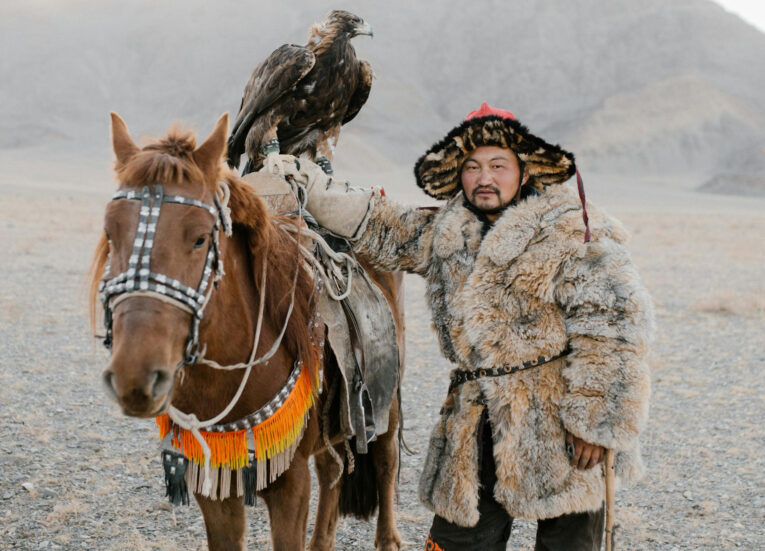
That said, horse racing can still mean different things in different places. While most of us are familiar with oval tracks and crowded stands, there is an event in Mongolia that flips modern notions of the sport on its head. Expansive, wild, historic, this event claims to be the most exciting adventure that can be had on horseback. We are inclined to agree.
Mongolia, Ireland, and Beyond
While the “global language of racing” was established largely as a way to capitalize on growing international interest in the sport, there are still interesting departures from the now familiar format.
For example, the Mongol Derby follows Genghis Khan’s thirteenth-century postal network. The trail is largely unmarked, and riders change horses every 35KM. Which kind of gives you an idea already of how large the actual track is.
In total, riders spend 1000 KMs on horseback. For American readers, that’s about 600 miles. The event takes about ten days to complete and is less about speed—though it is still a race—and more about endurance.
Ireland, on the other hand, having been a colony itself, follows a more typical English standardized version of racing.
Integrated Culture
Because digital technology opens up the world, fans of racing from all over the globe are now able to interact in ways that were never possible before. Consequently, there’s just a higher level of awareness surrounding international events that never would have been popular in a pre-Internet era.
Racing does change from place to place. Various cultures put their stamp on it. Mongolia is an incredibly dramatic example, but there are many little variations all over the planet. The fact that the game is not completely different all over the globe speaks, maybe, to the compelling nature of the European format.
It’s ultimately a game that is very different from, say, basketball, where one rule book dictates the way everyone plays. Cultures instead opt for a familiar racing narrative, not exactly out of necessity, but practicality. Why fix what’s not broken?
It’s exciting to find differences here and there. It’s also a testament to the quality and integrity of the sport that racing, despite having a global presence for hundreds of years, is largely recognizable wherever you find it.
Thank you for this insightful piece. It’s given me a lot to think about.