
Contents
Have you ever wondered how an egg gets to Everest Base Camp?
It sounds like a silly question until you think about where Everest Base Camp actually is. There is no road leading to the camp, no supermarket around the corner, and no delivery truck bringing a fresh load of groceries to the door.
Yet trekkers can sit down in the Khumbu region and order an omelette, boiled eggs, or eggs with breakfast.
That egg has already traveled a surprisingly complicated journey before it reaches the frying pan. Food supplies heading into the Everest region move through a chain of transport and trade that is very different from an ordinary grocery delivery. Depending on where they are going, goods can involve flights, porters, pack animals and local suppliers along the way.
And eggs are only one small part of it. Rice, flour, vegetables, cooking oil, drinks, fuel and countless other everyday necessities also have to reach the villages scattered across Khumbu.
So who brings them in? Where do these supplies enter the region? How far are they carried, and what happens as the trail climbs higher?
Once you start looking at the Everest Base Camp food supply, breakfast stops looking quite so ordinary. That egg on your plate is the final link in a supply chain shaped by distance, altitude, transport and a lot of human effort.
Where Does The Everest Food Supply Actually Start?
Before asking how food reaches Everest Base Camp, it helps to look at where the supplies actually come from.
A large share of the food and other goods used in the Khumbu comes from Kathmandu or the plains, while some food is produced locally. Supplies can enter the region by air and then move onwards by porters and pack animals.
For trekkers, Lukla is the familiar gateway to the Everest region, but it is not necessarily where every item begins its journey. Different goods can reach the Khumbu through different routes, depending on where they come from and where they are needed.
The classic trekking route towards Everest does not have a road carrying delivery trucks from Lukla to the higher villages. Commercial porters and animals take over much of the movement between villages, carrying supplies for lodges, shops and local businesses.
Most trekkers know Namche as an acclimatization stop, but its importance goes well beyond tourism. It has long been a trading centre for the region and remains an important place where goods are brought, sold and moved onwards towards the higher settlements.
That is why food availability changes along the route. Lower villages have more choice, while higher villages have fewer fresh ingredients and more limited menus, mainly due to the supply problem.
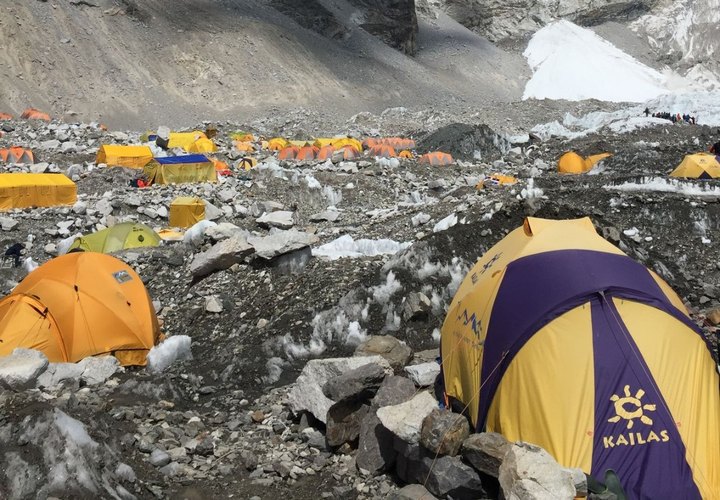
The few lodges in Gorakshep still need food, fuel and other daily supplies, even though they are operating at the end of the trail.
How Is Food Stored in the Everest Region?
Rice, flour, lentils, pasta, noodles, biscuits, and canned foods are practical stock for the lodge kitchens because they can be kept for long periods without refrigeration. Potatoes and onions also store well in cool, dry conditions, while leafy vegetables and other delicate produce have a shorter shelf life.
Fresh meat, milk, cheese and vegetables need more care, particularly in lodges where refrigeration is limited. Some kitchens have refrigerators or freezers, but storage space and electricity can limit how much fresh food can be kept. Dry goods are easier to keep in reserve, while perishable food needs more attention.
Food is kept in sacks, boxes, and containers to protect it from moisture, dust and pests. Cold temperatures can help keep some products cool, but they are not a substitute for proper food storage. A mountain kitchen has to keep track of what it has, what needs to be used first and what can safely stay in storage.
This is also why food on Nepal trekking routes can look quite different at higher elevations. What is available in a lodge kitchen depends partly on what can survive the journey and then remain usable once it gets there.
Why Does Food Cost More At Higher Altitudes?
Food prices rise higher on the Everest trail because a lodge has to spend to keep its kitchen running. Porters, yaks, dzos, and horses move supplies where they are needed, and some goods can also be brought in by air. The lodge has to cover those extra costs, along with cooking fuel, electricity, and the labour needed to prepare meals.
Running out of something is more difficult in a high mountain lodge than it would be in a town. A missing ingredient cannot be replaced with a quick trip to the market, so lodge owners have to plan purchases around the number of guests, available storage and how long fresh food can be kept. These practical problems become more important at places such as Lobuche and Gorakshep, where there are fewer options for replacing supplies.
The same idea can be seen on the Gokyo Lake trek, where food prices increase as the trail moves through Dole, Machhermo, and towards Gokyo. The menus may still include familiar breakfast and dinner dishes, but keeping those meals available in a remote mountain lodge costs more than it does in Namche Bazaar.
The People Behind Everest’s Food Supply
Commercial porters carry supplies for lodges, shops, and other local businesses in the Everest region. Their work is different from that of trekking porters, who mainly carry visitors’ personal luggage. Once supplies reach a lodge, staff receive them, organize what the kitchen needs and prepare meals for guests throughout the trekking season.
So, How Does That Egg Get There?
An egg on the breakfast table in the Khumbu has already had quite a journey before someone cracks it into a pan. It may have come from far below the mountains, traveled through several points along the way and finally reached a lodge kitchen where it becomes part of an ordinary breakfast.
So next time you see an egg on your breakfast plate, remember that it may have traveled some of the same trail you did, only in the opposite direction and without a backpack.
About the Author
Ankita Rayamajhi is a travel content writer who is learning her way through different places and experiences one journey at a time. She has a natural interest in understanding how people live in different regions and how every destination has its own small stories to offer. Along with writing, she enjoys creating travel videos and capturing simple everyday moments that reflect her experiences. Through both writing and visuals, she tries to share travel in a more natural way, focusing on real places, real people, and what she personally observes while exploring.