
Contents
Missouri sits at the geographic and cultural heart of America, and few states offer a more authentic window into what sports mean to everyday people.
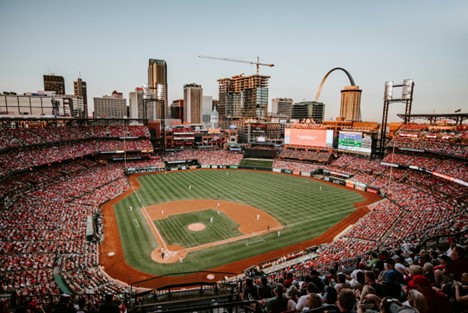
From the relentless noise at Arrowhead Stadium to the Cardinals’ red sea at Busch Stadium, the Blues faithful singing “Gloria” in downtown St. Louis, and the roar of Faurot Field on a Saturday afternoon in Columbia, Missouri’s sports culture runs deeper than wins and losses. It runs through community identity, local barbecue, generational loyalty, and a sense of place that coastal cities simply cannot manufacture.
Kansas City Chiefs: Football as a Way of Life
The Kansas City Chiefs are not just a football team in Missouri, they are a civic institution. GEHA Field at Arrowhead Stadium, which has a seating capacity of 76,416 and has been in operation since 1972, holds a Guinness World Record for stadium noise, with fans reaching 142.2 decibels during a 2014 game against the New England Patriots.
Visiting teams have literally begged referees to quiet the crowd, including a 1990 game against the Denver Broncos where John Elway had to stop play because the roar made communication impossible.
Under the current Patrick Mahomes era, the Chiefs have brought home three Super Bowls in a five-year span, and Kansas City is now preparing to host matches at Arrowhead for the 2026 FIFA World Cup, with the tournament projected to inject more than $695 million into the local economy.
St. Louis Cardinals: The Most Loyal Fans in Baseball
Across the state in St. Louis, the Cardinals have built something different but equally deep. Eleven World Series titles over the franchise’s history have created a fan culture that treats baseball less as entertainment and more as a civic inheritance. Busch Stadium draws approximately 3 million fans each year, and a single season of home games generates more than $310 million in economic activity for the St. Louis metro area.
Forbes values the Cardinals as a brand at $2.55 billion, placing them among MLB’s most valuable franchises, and in 2024 the team ranked seventh in the league for average attendance. Even the minor leagues carry the fever: the Springfield Cardinals, the Double-A affiliate, draw more than 250,000 fans annually, showing that Cardinals devotion extends well beyond the city limits.
The Blues and Hockey’s Deep Roots in St. Louis
Missouri offers travelers an authentic slice of American sports culture that coastal cities can’t replicate. The passion here feels different, more genuine, less corporate, deeply rooted in community identity. Since December 2025, when eight licensed sportsbook operators launched simultaneously, Missouri’s sports landscape evolved with legalized sports betting, and travelers notice locals using Missouri sportsbook promos as casually as ordering beers.
It’s become part of the fabric, just another way Missourians engage with the Chiefs, Cardinals, and Blues that define their state’s identity. St. Louis is one of the NHL’s most genuine hockey cities, a fact the Blues’ 2019 Stanley Cup championship brought into sharp national focus.
Founded in 1967 as part of the league’s first major expansion, the Blues spent 52 years agonizingly close before Craig Berube, serving as interim head coach, guided a team that had been dead last in the standings in early January all the way to a seven-game series win over the Boston Bruins on June 12, 2019.
Ryan O’Reilly won the Conn Smythe Trophy as playoff MVP, and the celebration spilled across the entire city, with thousands gathering at Busch Stadium for a hockey watch party as the Cardinals invited fans to “turn Busch Stadium blue.” The Enterprise Center hosts more than 175 events annually, and according to city estimates, St. Louis collects $300,000 in direct tax revenue for every Blues playoff home game from tickets, parking, and concessions alone.
Mizzou and the College Sports Identity
The University of Missouri Tigers operate as the state’s flagship college program, competing in the SEC and carrying the weight of statewide identity every Saturday. The 2025 season ended with Mizzou finishing 8-4 under head coach Eli Drinkwitz, earning a sixth consecutive bowl berth and a matchup against Virginia in the TaxSlayer Gator Bowl.
The rivalry with Kansas, rooted in Civil War-era history between the two border states, returned in 2025 for the first time in 14 years, with Missouri winning 42-31 at Faurot Field, and the 2026 rematch at Lawrence has already been elevated to a Friday night national television broadcast. Mizzou’s connection to the professional game runs deep as well: Dan Meers, who spent four years as Truman the Tiger at Missouri, went on to become KC Wolf, the Chiefs’ mascot and the first NFL mascot inducted into the Mascot Hall of Fame.
Two Cities, One State, Distinct Identities
What makes Missouri’s sports culture particularly fascinating for any outside visitor is the contrast between Kansas City and St. Louis, two cities separated by roughly 250 miles of Interstate 70 that share a state but carry genuinely different sporting personalities.
Kansas City’s culture wraps around football and barbecue, with the Chiefs occupying an almost mythological status and game days anchored by BBQ Alley at Arrowhead, featuring restaurants like Smoke Brewing, Plowboys BBQ, and Dickey’s Barbeque Pit. St. Louis runs on baseball and hockey, with deep working-class traditions attached to both the Cardinals and the Blues.
The St. Louis Battlehawks also demonstrated that alternative football belongs in this market, setting a modern spring football attendance record in 2024 with 40,317 fans at their home opener at The Dome at America’s Center and averaging 34,365 fans per game across the season, more than double any other United Football League team. Together, the two cities form a sports state unlike anything on the American coasts, competitive, communal, and genuinely proud.