
Some nights don’t need force – they need reassurance. That’s really the whole thing. You’re tired, properly tired, but your brain is still idling like a car that won’t quite turn off. Chamomile helps not by knocking you out, but by turning the volume down until sleep feels like the obvious next step. And that distinction matters more than people think. This isn’t about sedation. It’s about making sleep easier to fall into, especially if you’re in that “exhausted but not panicked” zone.
From a performance point of view, chamomile lives firmly in the mild-to-moderate intervention camp. A normal cup – brewed with 2-2.5 g of dried chamomile flowers in 240 ml (8 oz) of water – lands right in the range where studies see gentle calming and shorter time-to-sleep, without that weird heavy-head feeling the next morning (source). No measurable psychomotor impairment. You wake up as yourself, not foggy, not dulled. That’s the trade.

Why chamomile tea earns its place
Chamomile tea is well known for helping with sleep, but what should you look for when buying one?
Here is our advice:
- Single-ingredient chamomile tea:predictable, gentle, and suitable for nightly use without tolerance buildup. This matters more than it sounds. When it’s just chamomile, you can actually tell what’s helping and what isn’t. Sleep better? Okay, that’s the chamomile. Sleep worse? Same logic. With blends, that clarity disappears fast. On a chemical level, you’re looking at roughly 0.8-1.2 % flavonoid content by dry weight, depending on harvest quality, which keeps the effect steady night to night.
- Whole-flower chamomile: higher essential oil retention than dust-filled sachets, resulting in a warmer aroma and slightly deeper calming effect. Whole flowers keep their volatile oils longer; after six months of storage, they still hold 20-35 % more volatile oils than finely cut tea dust. That’s why one smells flat and the other actually feels comforting.
- Plain chamomile without added flavors: fewer sensory distractions, which matters when overstimulation is already the problem. Citrus oils, vanilla flavoring, even tiny amounts of sweetener – as little as 0.05-0.1 % – can wake up digestion and attention just enough to work against you at night.
The chemistry side is simple but important. Chamomile’s calming effect comes largely from apigenin, a flavonoid that binds to benzodiazepine receptors involved in nervous-system quieting – yes, the same receptor family targeted by prescription sleep meds, just dramatically gentler.
Dried chamomile flowers usually contain 3-7 mg of apigenin per gram, so a normal cup delivers 5-15 mg, depending on flower quality and how long you steep it. In real life, that shows up as falling asleep 10-15 minutes faster, fewer middle-of-the-night wake-ups.
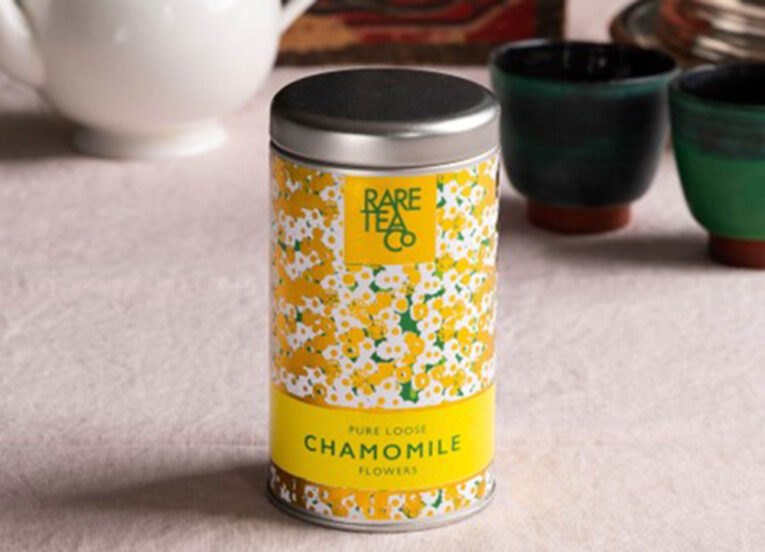
Recommended brand: Rare Tea Company
Rare Tea Co Chamomile Flowers are a reliable source of whole-flower chamomile that’s minimally processed, plastic-free, and fresher than most commercial options, which helps preserve apigenin and essential oils. That higher-integrity sourcing and handling translates into a more consistent, gently calming cup of tea.
Lemon Balm: when the problem is mental noise, not physical tension
Lemon balm is what you reach for when your body is technically tired, but your thoughts are still rehearsing tomorrow. This is the tea for low-grade anxiety, rumination, and that looping inner monologue that does not feel dramatic enough to justify “strong” sleep aids, but still blocks sleep.
Functionally, lemon balm sits closer to chamomile than valerian, but its emphasis is cognitive rather than sedative. The primary compounds here are rosmarinic acid and volatile terpenes, which reduce excitatory signaling and gently enhance GABA availability without depressing the nervous system. Translation: your thoughts slow down, but you do not feel drugged.
A typical effective cup uses 1.5-2 g of dried lemon balm leaf per 240 ml of water, steeped for 10 minutes. That delivers roughly 40-80 mg of rosmarinic acid, depending on growing conditions and harvest timing. In controlled studies, that range correlates with reduced anxiety scores and modest improvements in sleep latency, particularly in people whose sleep issues are stress-driven rather than circadian.
What matters when buying lemon balm tea:
- Single-herb formulations: Lemon balm works best when it is not competing with stronger sedatives. Blends often drown it out.
- Leaf integrity: Whole or large-cut leaves retain volatile oils far better than powdered material. Aroma is a useful proxy here – flat smell usually means diminished effect.
- Freshness over strength claims: Lemon balm loses potency steadily after harvest. Expect noticeable decline after 9-12 months unless properly stored (source).
This is not a knockout tea. Expect a quieter mind, slightly faster sleep onset (often 10-20 minutes), and fewer stress-related awakenings – not sedation.
Passionflower: for light sleepers who wake too easily
Passionflower fills a specific gap: people who fall asleep without much trouble but do not stay there. Noise sensitivity, shallow sleep, and frequent micro-awakenings are where it shows its value.
Chemically, passionflower contains flavonoids and alkaloids that modulate GABA activity more directly than chamomile or lemon balm, but without the blunt force of valerian. It stabilizes sleep architecture rather than forcing sleep onset.
A standard preparation uses 1-2 g of dried aerial parts per cup, producing effects linked to improved sleep continuity and fewer nighttime awakenings in mild-to-moderate insomnia cases. Unlike valerian, passionflower has not been strongly associated with next-day grogginess at these doses.
Buying considerations that actually matter:
- Aerial-part sourcing: Leaves and stems are where the active compounds concentrate. Root-heavy products are less predictable.
- Minimal flavor additions: Passionflower has a mild bitterness. Masking it with sweeteners often undermines nighttime calm.
- Clear dosage guidance: Passionflower works within a narrower effective range than chamomile; under-dosing does very little.
This tea is best for people whose sleep is fragile rather than absent.

Valerian Root: for short-term, high-stress sleep disruption
Valerian is the line you cross when gentler teas stop working – and it should be crossed deliberately.
Unlike the previous herbs, valerian is a true sedative. Its valerenic acids interact directly with GABA receptors, producing measurable reductions in sleep latency and increases in slow-wave sleep. This is why it works – and why it is not ideal for nightly, indefinite use.
A functional cup typically contains 400-600 mg of dried valerian root equivalent, which is difficult to achieve with weak tea bags (source). At this range, studies show faster sleep onset (often 15-30 minutes sooner) but also report next-day heaviness in a subset of users.
Key trade-offs to understand before choosing valerian:
- Potency vs. clarity: It works, but the mental “cleanliness” of sleep is lower than chamomile or lemon balm.
- Frequency limits: Best used a few nights per week during acute stress periods, not as a permanent ritual.
- Taste tolerance: The earthy, musky smell is a deal-breaker for some. Masking it often requires additives that defeat the purpose.
Valerian is not subtle. It is a tool, not a comfort drink.

Magnesium-Infused Herbal Teas: when sleep fails because the body will not relax
Sometimes the issue is not the mind at all. It is physical restlessness – tight muscles, jaw clenching, leg twitching, that wired-but-exhausted body feeling. That is where magnesium-based sleep teas earn their place.
Magnesium supports sleep indirectly by reducing neuromuscular excitability and supporting parasympathetic activity. In tea form, it is usually paired with neutral herbs like rooibos or chamomile to make ingestion easier.
An effective serving delivers 100-200 mg of elemental magnesium, ideally in glycinate or citrate form. Below that, effects are subtle. Above that, digestive tolerance becomes the limiting factor.
What separates effective magnesium teas from decorative ones:
- Declared elemental magnesium content: “Magnesium blend” without numbers is meaningless.
- Chelated forms: Oxide is poorly absorbed and more likely to cause GI issues.
- No added stimulants: Even small amounts of cacao or spices can counteract relaxation.
This category works best for people with physical tension, exercise-related restlessness, or magnesium insufficiency – not anxiety-driven insomnia.
Rooibos and Tulsi: the long-term, every-night options
Some people do not want “sleep aids” at all. They want a nightly signal that the day is over – something safe, non-sedating, and repeatable for years.
Rooibos and tulsi (holy basil) fit that role. Neither is a sedative. Both are caffeine-free, mineral-rich, and associated with reduced stress markers over time rather than immediate sleep effects.
Expect:
- No forced drowsiness
- Gradual improvement in sleep consistency
- Zero tolerance buildup
These teas work best as part of a routine rather than a solution to acute insomnia.

Choosing the right sleep tea comes down to why you are awake
If sleep will not start – chamomile or lemon balm
If sleep will not last – passionflower
If stress is overwhelming – valerian (short-term)
If your body will not settle – magnesium-infused teas
If you want a lifelong ritual – rooibos or tulsi
Sleep tea works when it matches the problem precisely. When it does not, even the “best” tea feels useless.
If disruption is persistent and herbal teas have topped out — dispensaries in states where cannabis is legal carry CBD formulations with documented cannabinoid content and consistent batch testing, which offer more precision than most over-the-counter options