
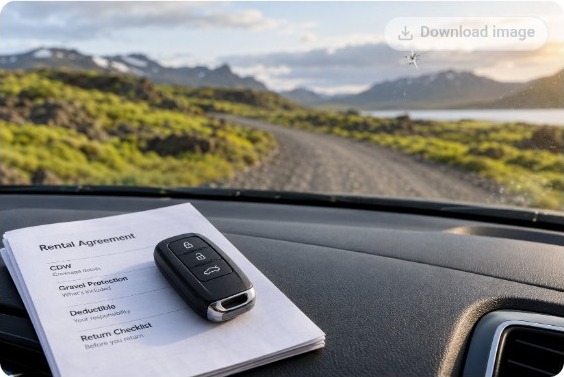
Understanding the details of car rental insurance and renter rights is essential for anyone planning to drive in Iceland. This guide covers what you need to know about rental car insurance in Iceland, typical protections offered, exclusions, and your responsibilities when renting a vehicle in Iceland.
Driving in Iceland offers a unique sense of freedom, with dramatic landscapes and open roads inviting travelers to explore at their own pace. However, the rapidly changing weather, mix of gravel and paved routes, and unfamiliar local conditions mean preparing well is crucial. Understanding your protection choices and the basic rights you have as a renter can help avoid unexpected costs or disputes. Knowing how Iceland rental car insurance works and what your agreement covers will make a self-drive trip smoother and more secure from the start.
The basics of car rental insurance terms
Car rental “insurance” often combines different types of protection, each covering specific risks. One common distinction is between third-party liability coverage and cover for damage to your rental vehicle. In Iceland, liability insurance usually comes standard, covering injury or damage you might cause to others or their property during your rental period.
You’ll also encounter terms like “deductible” or “excess.” This is the amount you pay out of pocket if your rental is damaged, even if you buy extra protection. The daily price of the rental usually does not reduce this number automatically. Purchasing additional coverage lowers your responsibility for costs after an incident.
Be aware of terminology differences. “Collision Damage Waiver” (CDW) and “Super CDW” can lower your share of specific repairs. Sometimes, “waiver” or “protection” are used interchangeably by Icelandic firms, but the inclusions and limits may vary.
Types of cover available for renters
The most common rental insurance options in Iceland reflect the country’s unique driving challenges. Collision damage protection covers much of the vehicle if you have an accident on normal roads. However, Iceland’s gravel roads carry higher risk, so “gravel protection” is often offered as an add-on to cover damage from loose stones to paint or glass.
Strong winds are another hazard, especially in exposed regions. “Sand and ash protection,” sometimes listed separately, can address repairs for damage caused during sandstorms or volcanic ash events. Theft protection covers loss of the vehicle due to theft, which is generally uncommon in Iceland but may provide peace of mind.
Roadside assistance may be included or billed as an extra. This is a service rather than insurance and helps with jump-starts, towing, or support if you’re stranded. While coverage policies pay for repairs, roadside plans focus on getting you back on the road quickly.
Common exclusions and caution zones
Certain events are often not covered, leaving renters financially responsible. Driving on unauthorized or highland “F” roads without a suitable vehicle is a frequent exclusion, as is fording rivers or crossing deep water. Rental agreements will typically list prohibited areas, and breaching these terms could void your coverage.
Undercarriage, tire, and glass damage are sometimes only partially covered or explicitly excluded unless you buy extra protection. Losing keys, refueling errors, or ignoring official weather or road closure warnings also tend to fall outside standard cover.
Negligence, such as driving recklessly or disregarding rental company instructions, may result in your claim being denied. Carefully reading your agreement helps you avoid these gray areas and the financial surprises they can lead to.
Your rights and essential rental documentation
Icelandic regulations require rental companies to provide clear contracts outlining what your responsibilities and protections are. Always check that the rental agreement specifies the main insurance types, deductibles, and restrictions. Before driving away, inspect the vehicle for any existing scratches, dents, or glass chips. Note these in the paperwork and take date-stamped photos for your records.
Keep copies of your agreement, payment receipts, and any emails related to your booking. Rental firms set their own rules on fuel returns, mileage limits, and deposit holds on your card. Understanding these in advance gives you more control if a dispute ever arises over payment or damage claims.
Comparing cover without paying more than needed
Not all travelers face the same risks. If your trip is limited to well-traveled areas in mild weather, such as a short summer visit near Reykjavik, extensive cover may not be essential. For multi-day ring road adventures or winter expeditions, additional protection can be a practical safeguard.
Review your itinerary for exposure to gravel, mountain passes, and remote areas. Compare what cover is included with your card or travel insurance against the rental’s offerings before booking. For anyone weighing options on rental car insurance, aligning your choices with route, season, and personal risk comfort helps keep your costs under control.
Checklist for pickup and return
- Walk around the vehicle with the agent, noting all visible damage.
- Confirm the fuel and mileage terms match the paperwork.
- Ask about emergency numbers, restricted roads, and procedures for breakdowns.
- Double-check return timing, especially for flights or after-hours drop-offs. Some locations have unattended returns.
- Request a final invoice or return receipt to document the handover and help confirm deposits are released.
Making informed and confident choices
Taking time to read terms, ask questions, and carefully document the condition of your vehicle pays off if any issues arise. While Iceland’s conditions bring some unique risks, clear rules and consumer protections can support fair treatment for travelers. With a basic understanding of coverage types and exclusions, you can drive the country’s routes with a clearer sense of how your trip is protected and what your responsibilities are as a renter.