
Contents
Travel a wine region in Asia and you almost always end up with a bottle (or four) in your luggage that wasn’t strictly part of the plan. Mine were two Yunnan reds from a Shangri-La winery, a Niigata koshu I’d shipped home from a Tokyo tasting bar, and a Bali Hatten Aga White that I’d bought for the label and ended up actually liking. None of them were investment bottles. All of them deserved better than the kitchen cupboard above the oven.
If you’ve come home from a wine-region trip in Asia and you’re trying to work out how to actually store what you brought back, this is the bit they never cover in the cellar-door tasting. Storage matters more than people think, especially for bottles like these. Yunnan reds tend to be high-acid and lower-tannin. Ningxia bordeaux-style blends are aging-friendly but cork-sensitive. Bali wines, made from Australian-shipped grape concentrate, are flexible drinkers. Japanese koshu rewards patience even though most people drink it young. Get the storage wrong and you wreck what you carried home.

Why Asian wines reward patient storage (and how that changes the storage rules slightly)
The shorthand wisdom of European cellaring – around 12 to 15°C, 60% relative humidity, dark, still – applies to Asian-region bottles too, but with some specific quirks. Yunnan reds at altitude are made from cabernet sauvignon, merlot, and the local Crystal grape (Shuijing); the high-acid profile means they actually shape up nicely over three to seven years if kept at consistent cool temperature. Ningxia is doing seriously good bordeaux-style work, often with longer aging windows than people expect. Japanese koshu is a low-alcohol, delicate white that tends to oxidise faster than European whites if mistreated, but well-stored examples soften beautifully over two to four years.
The research is clear on what does the damage in poor storage. A 2023 study on the bottleneck-stopper system found that cork-based closures require relative humidity above 50% to maintain elasticity, but anything above 80% increases the risk of mould forming on the outer cork (source). Aroma research on white wines stored in cellar conditions (around 15°C, 55% relative humidity) versus room conditions (around 25°C, 29% relative humidity) shows that warm storage strips fruit-forward esters within months – riesling specifically loses its fresh aromatic profile under those conditions. Vibration is the under-discussed variable: a one-year study on Pinot Noir found that even microvibrations from typical household sources affect the development of higher alcohols and aromatic precursors (source).
For a flat with central heating cycling on and off, or a house with the rack on a wall shared with the washing machine, those numbers matter. A consistent 16°C is much better than a fluctuating 12 to 18°C. A still corner away from speakers is better than a stylish spot near the lounge.

The four storage essentials, in priority order
If you can’t run a properly conditioned cellar (and most of us can’t), aim for these in priority order:
- Consistent temperature, even if it’s slightly warm. 15 to 16°C in a stable cool spot beats 12 to 18°C in a place that swings with the heating.
- Humidity between 55% and 70%. UK flats often run dry in winter; a small humidifier near the rack helps. Asian-tropical-origin bottles don’t need their original climate replicated – they need stable European-typical conditions.
- Bottles on their side if corked, so the cork stays wet and elastic. Stelvin-capped wines (some Japanese producers use these) can sit upright.
- Away from light, vibration, and strong smells. UV degrades wine; vibration disrupts sediment; cork is permeable enough that a strong onion or paint smell in the storage space can transfer.
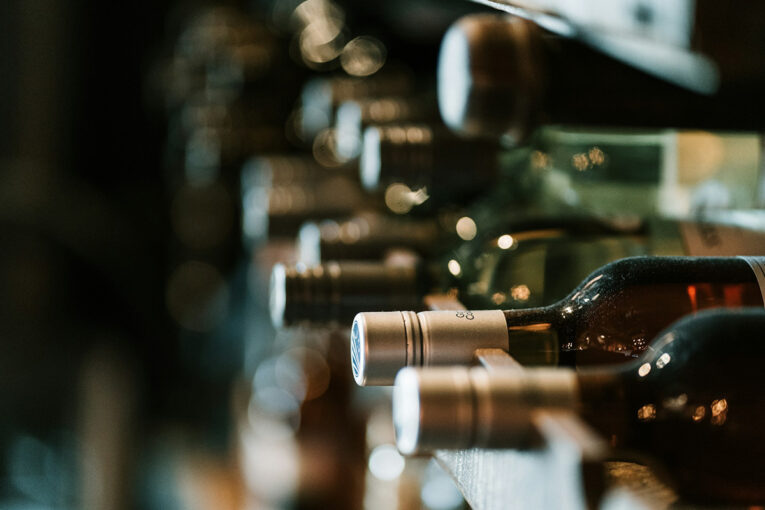
Choosing your rack: why wood, not metal or coolers, for a travel collection
Here is where most travel-collector storage advice falls apart. The recommendation is always “buy a wine cooler.” For a 200-bottle investment cellar, fine. For 12 to 30 bottles you’ve collected from trips, a cooler is overkill in size, runs noisily in a small home, and makes a personal collection feel like a kitchen appliance.
A traditional wooden wine rack does the actual job better, and it does it without electricity. Three reasons specifically, and these matter for a returning-traveller collection rather than a serious aging cellar.
Wood breathes and buffers temperature. Cedar, redwood, and mahogany are slow conductors of heat. In a room that swings a few degrees during the day, a wooden rack absorbs the swing rather than transferring it directly to the bottle. Metal racks (cool to the touch in winter, warm in summer) do the opposite. For a collection in an unconditioned room – which is what most of us are working with – that buffering is the difference between bottles aging gracefully and bottles aging faster than they should.
It looks like what travel bottles are. Mementos. The Yunnan red on a redwood rack with its label outward looks like an object you brought back from a place that mattered. The same bottle in a wire metal frame looks like it’s awaiting bottling-line inspection. This isn’t decoration for its own sake – it changes whether the bottle gets opened on the right occasion or forgotten behind a stack of weekday reds.
Wooden racks scale with a collection, not against it. Most travel-collected bottles arrive in fives and twelves. A modular wooden rack expands by row; you add a section the next time you come back with bottles. You don’t need to commit to a 60-bottle cooler before you actually have 60 bottles.
The straightforward choice for a returning-traveller collection is a 12 to 24 bottle wooden rack – redwood for traditional cellar aesthetic, mahogany if you want something darker, cedar if you like the lighter grain and the trace aromatic. WCHQ Wooden Wine Racks are a great example of this. They’re a Texas-based company that’s been focused on wine storage since 2016, and they’re one of the few sellers where the racks come in those three different species rather than “wood” as a single option. Wine Cellar HQ’s range comes from what they describe as brands they’ve specified, installed, and lived with – Kessick, Le Cache, and Ultra Wine Racks among them – which matters because the same crew designs and builds custom cellars in central Texas and picks racks for online buyers on the same standard.
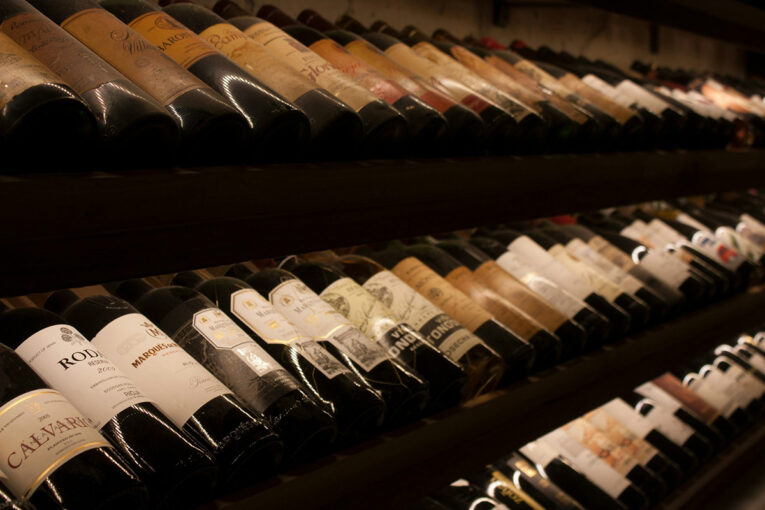
A small-room setup for the returning Asia traveller
For a typical UK flat or a small house, here’s what actually works:
- Position the rack on an internal wall (not against an exterior wall, which transfers outside temperature). A north-facing internal wall is best for thermal stability.• Keep it off the floor by at least a few inches, especially in flats above ground floor – vibration from foot traffic is more concentrated near floor level.
- Pick the right size on day one if you can. A 24-bottle wooden rack is the practical inflection point for most travel collectors. Below 12 bottles, a countertop is fine; above 30, you’re into needing dedicated cooling.
- Label each bottle with origin and tasting date if you bought it on holiday. Cork ages faster than memory.
A small wireless temperature/humidity logger sits in the rack and tells you what your conditions actually are, not what you assume they are. If your readings consistently hit above 20°C, the rack location needs to change – not the wine.
What about coolers, then?
If you’re seriously collecting and aging – say, you’re already over 40 to 50 bottles and the bottles are worth aging another decade – then yes, you graduate to a conditioned cabinet or a built-in wine cooler with humidity control. That’s a different category of buying, and it makes sense at that level.
For a returning-traveller collection of 12 to 30 bottles, a wooden rack in a properly chosen spot is the more honest answer. It costs less, looks better, fits better in the kind of homes most of us live in, and does the job that a 200-litre noisy cabinet would do badly at this scale.
Bring it home and do the right thing
The bottles you bring back from a trip carry a story before the cork comes out. The point of storing them properly isn’t really about preservation – it’s so that the bottle you opened a year after that Yunnan winery visit still tastes like the place. Pick a wooden rack, find a still cool corner, log the temperature for a fortnight to check it behaves, and the bottles will reward the trip when you’re ready to open them.